
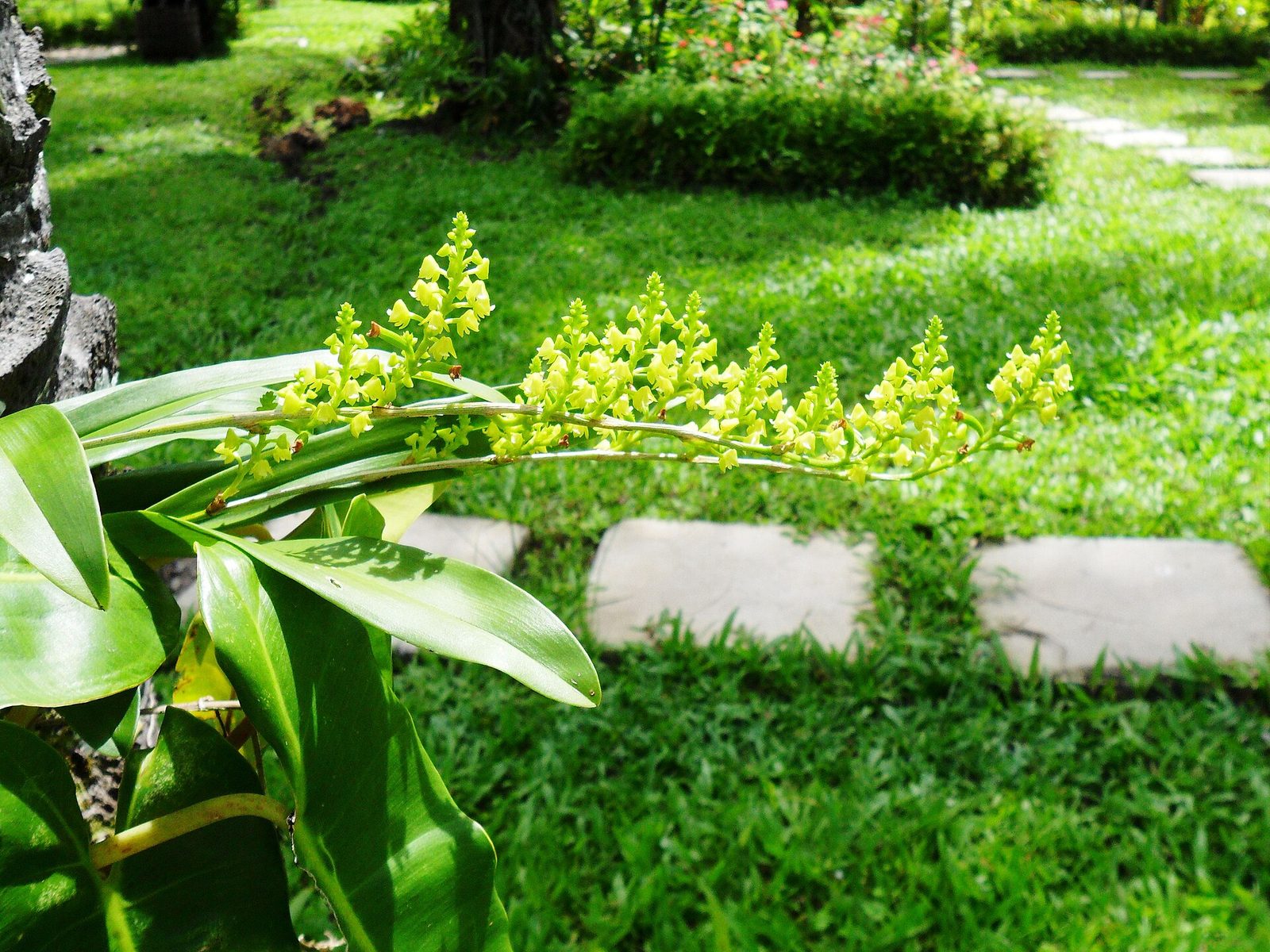
Step off the veranda onto one of the reserve's forest paths and the first thing the Atlantic Forest does is overwhelm you with green. Not one green but dozens: the waxy dark of a laurel leaf, the pale flush on a young shoot, the silver underside of a leaf turned by the wind, the near-black of moss in the shade. Look closer and the green resolves into layers, and the layers into individual lives. A bromeliad is wedged in the fork of a branch. An orchid no bigger than your thumbnail clings to the bark. A fern uncurls on a wet bank. A fig tree has swallowed its host whole.
This is the Mata Atlantica, the Atlantic Forest, and the stretch of it that climbs the slopes above Paraty is among the richest and least disturbed left anywhere. It is not the Amazon. It is wetter in places, far more endangered, and, acre for acre, one of the most crowded assemblies of plant life on Earth. Most of what grows here grows nowhere else.
This guide is a field companion to that flora. It will not turn you into a botanist in an afternoon, but it will help you read the forest: to see the layers, to recognize the big families, to understand why the palm on your plate is a conservation question and why the orchid on the branch should stay on the branch. Carry it on a slow walk. The forest rewards slowness more than almost anything else.
A forest built on rarity
The Atlantic Forest earns its reputation the hard way. It is at once one of the most diverse forests on the planet and one of the most threatened, and those two facts are tangled together. Take the diversity first. This forest runs down much of Brazil's coast and climbs from the beach to the cool, cloud-wrapped tops of the Serra do Mar, the mountain wall that rises just behind Paraty. That range of altitude and rainfall packs many different forests into a small space. The humid lowland woods near the sea grade into montane forest, and higher still into a stunted, moss-heavy cloud forest. Each band has its own plants. Long ago the Atlantic Forest was cut off from the Amazon by a belt of drier country, and in that long isolation it grew a flora largely its own.
The result is endemism on a remarkable scale. A large share of the trees, orchids, bromeliads, frogs, and birds here live in this forest and nowhere else on Earth. That is the heart of what biologists mean when they call the Mata Atlantica a biodiversity hotspot, and it is worth reading more about how that richness is assembled in our guide to the biodiversity of the Mata Atlantica.
Now the hard part. The Atlantic Forest is also where most Brazilians have always lived. Over five centuries it was cleared for brazilwood, sugar, gold, coffee, cattle, and cities, until only a small fraction of the original forest remained, and most of what survives is broken into fragments, islands of green in a sea of pasture and town. A hotspot, by definition, is a place with extraordinary life and extraordinary loss at the same time. The Atlantic Forest is the textbook case.
This is why an unbroken block of forest matters so much. The reserve holds hundreds of acres in one piece, connected to the larger forest of the Serra do Mar and the Serra da Bocaina, which lets big trees stand, water run clean, and animals move between the crowns. Keeping forest whole is the single most useful thing anyone can do for this flora, and it is the work at the center of our conservation effort. Everything else in this guide, every orchid and palm and flowering tree, depends on it.
How to read a forest in layers
A rainforest is not a wall of undifferentiated green; it is a building with floors, and once you learn to see the floors the whole thing makes sense. On a walk, try to place every plant you notice in one of four layers. It will change the way you look at all of it.
The emergent giants
A few trees push their crowns above everything else and stand alone in the sun and wind. These emergents, the old figs and jequitibas and their kind, are the landmarks of the forest, and their broad crowns carry the heaviest gardens of epiphytes. Look for a tree that breaks the even line of the canopy and towers over its neighbors; that is where much of the forest's aerial life is concentrated.
The closed canopy
Below the giants, the crowns of most tall trees knit together into a more or less continuous roof. This canopy catches most of the light and most of the rain, and it is where a great deal of the forest's business happens, the flowering, the fruiting, the feeding, often far out of sight overhead. What reaches the ground is a green, filtered dimness that shapes everything living beneath it.
The understory
In that dim light grows the understory: young trees waiting for a gap, palms, tree ferns, shrubs, and the tangle of climbers hauling themselves upward. This is the layer you actually walk through, and it is where a patient eye finds the most, whether a small orchid at eye level, a bromeliad on a low branch, or a flower you would never see from below the canopy.
The forest floor
At the bottom is the floor, deep in leaf litter, threaded with roots and fungi, damp and cool. Little grows in the darkest patches, but where a fallen tree opens a shaft of light the floor erupts with seedlings, ferns, and herbs all racing for the gap. Watch the ground as carefully as the canopy; some of the smallest and strangest plants are down there in the moss, easy to walk straight past.
Reading these four layers is the first skill of forest-watching, and it makes every later section of this guide easier to use. Epiphytes belong to the canopy and the light gaps. Palms and tree ferns fill the understory. Mosses, seedlings, and the tiniest orchids live on the floor. Once you can place a plant in its layer, you half-know what it is.
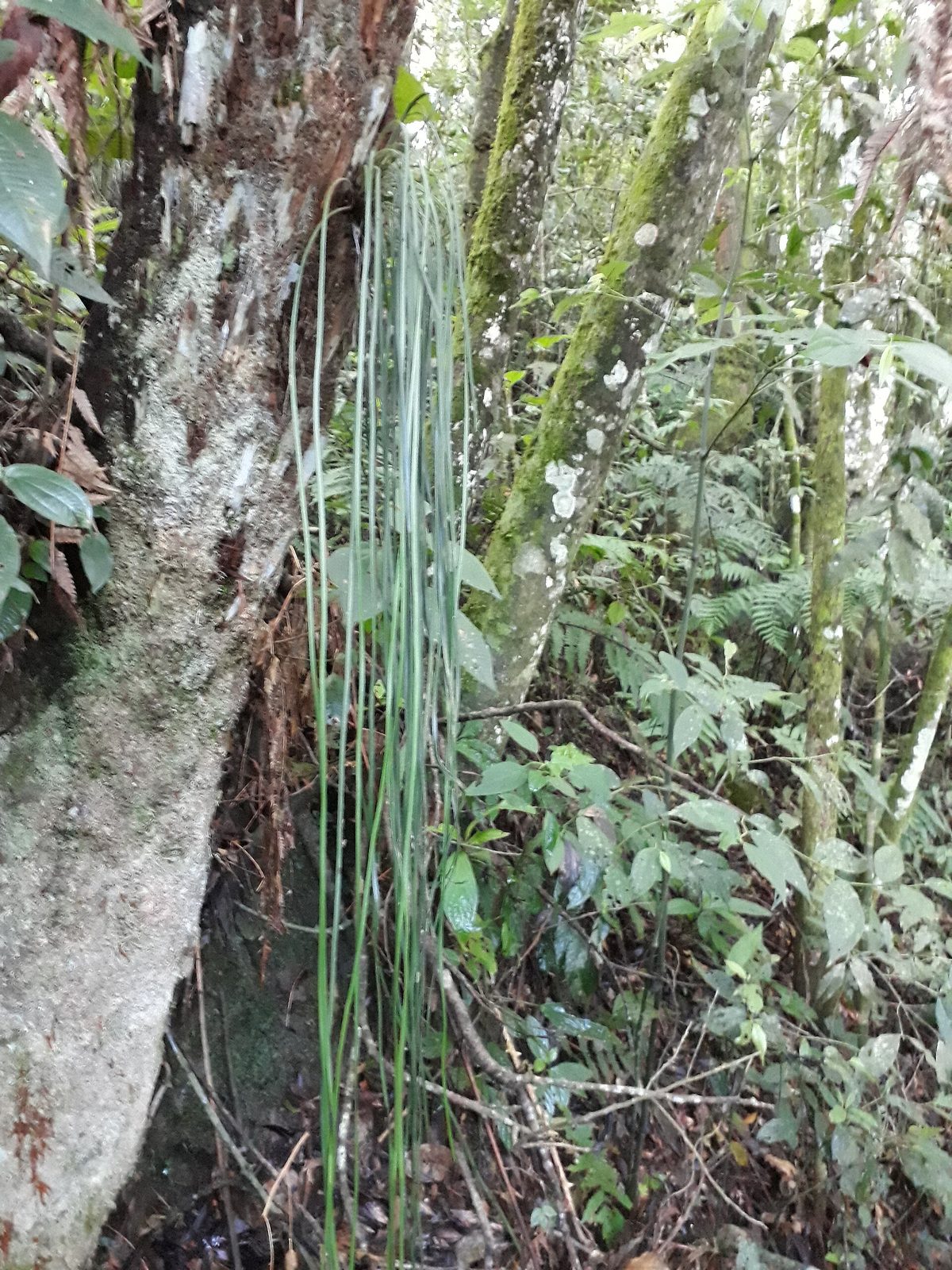
Gardens in the air: epiphytes
The signature of a wet tropical forest is the sheer amount of life growing on other life. Epiphytes, the plants that perch on trunks and branches, are not parasites; they take nothing from their host but a place to sit, a foothold up in the light where the soil could never carry them. A single old tree can hold an entire hanging garden of them: bromeliads, orchids, ferns, cacti, mosses, and aroids, layered along every limb from trunk to crown.
A single old tree can hold an entire hanging garden, bromeliads and orchids and ferns and cacti and moss layered along every limb.
Tank bromeliads, and the ponds in the trees
The bromeliads are the ones you will notice first. Many of them are tank bromeliads, their stiff leaves arranged in a tight rosette that funnels rainwater into a central well. That well is a small pond suspended in the canopy, and it is one of the busiest addresses in the forest. Tree frogs lay their eggs in it and their tadpoles grow up in it, never touching the ground. Mosquito and damselfly larvae, tiny worms, beetles, and other small creatures live in the water, and the drowned leaves and insects that fall in feed the whole community. Some frogs spend nearly their entire lives around these pools, which is one of the reasons the bromeliads matter so much to the animals described in our guide to the wildlife of the reserve. A tank bromeliad is not one plant; it is a habitat.
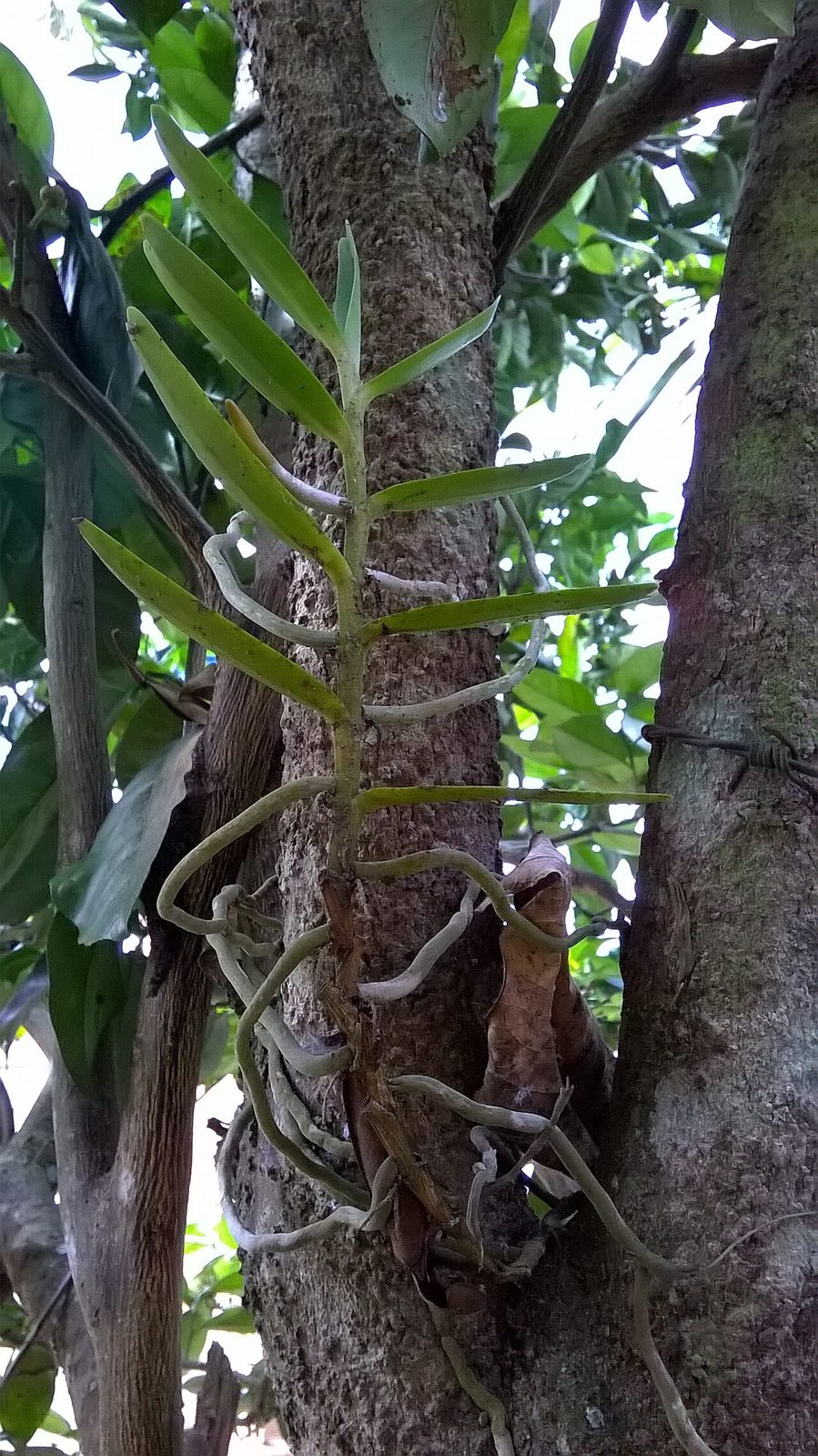
Air plants and the smaller epiphytes
Not all bromeliads hold water. The tillandsias, or air plants, are the gray-green tufts you see clinging to bare twigs and even to wires out in the open; they drink through their leaves and need almost nothing but damp air. Around them grow the other epiphytes: leathery-leaved orchids, filmy ferns only a cell or two thick, trailing cacti, and cushions of moss that hold water like a sponge. Even the Christmas cactus, the one that blooms on kitchen windowsills across the Northern Hemisphere in December, is at home here. It is native to exactly these coastal mountains, where it grows wild on shaded branches and rocks, a small piece of Paraty's forest sitting in pots around the world.
An epiphyte-heavy tree is a sign of clean, moist, undisturbed air. Epiphytes have no roots in the soil and draw their water and nutrients straight from rain and mist, so they cannot tolerate pollution or long dryness. When you see a trunk furred from root to crown with growth, you are looking at forest in good health, and at a slow accumulation that took many years to build.
The orchids of these mountains
No group of plants carries as much romance as the orchids, and the Atlantic Forest is one of the great orchid regions of the world. They range from showy to nearly invisible. The famous ones are the cattleyas: big, ruffled, richly colored blooms that were carried off to European greenhouses by the crateload in the nineteenth century and still lend their shape to the corsage in every florist's window. Brazil is their homeland, and several of the most prized cattleyas are Atlantic Forest natives, taken historically from forests very like this one.
But the cattleyas are the exception. Most orchids here are small, and a great many are tiny, with flowers a few millimeters across borne on plants you could hide under a coin. The pleurothallids, an enormous group of miniature orchids, grow in mossy shade on trunks and rocks, and you can walk past a hundred of them without noticing one. Others announce themselves by scent before sight. Many species are pollinated by a single kind of bee, moth, or fly, and have evolved shapes and smells to match that one partner. That tight arrangement is part of why orchids are so vulnerable: lose the pollinator, or move the plant off its branch, and the whole thing falls apart.
Orchids grow both as epiphytes on the trees and as terrestrials rooted in the leaf litter. Look for them in flushes after rain, and especially where light breaks through: along a stream, at the edge of a clearing, on a fallen giant slowly being reclaimed by the forest. The best orchid-watching is quiet and close. Kneel by a mossy log, look at the scale of a fingernail, and a whole hidden layer of the forest opens up, a layer most visitors walk straight past on their way to the waterfall.
Look, don't pick
Wild orchids and bromeliads have been stripped from easy-to-reach forests all over Brazil by collectors, and a plant pried off a trunk almost never survives the move. Enjoy them where they grow, photograph them, note where they are, and leave them exactly there. If you want orchids or bromeliads for home, buy nursery-grown plants raised from seed or division, never wild-collected ones. The forest keeps its beauty only if every visitor takes it home as a memory rather than a souvenir.
The big trees
Every forest has its giants, and the Atlantic Forest's are worth learning by name. They are the trees that build the whole structure: the emergents whose crowns carry the epiphyte gardens, the trunks that outlast generations of smaller plants, the seed sources that keep the forest coming back after every disturbance.
The strangler fig
The figueira, or strangler fig, is the forest's great character. It begins life as an epiphyte. A bird or a bat drops a seed high on a branch, and the young fig grows there, sending roots slowly down the trunk of its host toward the soil. Once those roots reach the ground the fig grows fast, thickens, and knits into a lattice that wraps the host tree completely. In time the host may die and rot away, leaving the fig standing as a hollow tower of fused roots, alive and enormous, shaped around the ghost of another tree. Figs also feed a huge share of the forest's animals; when a big fig comes into fruit, the whole canopy arrives to eat.
The jequitiba and the tall timber
The jequitiba is among the largest trees of the Atlantic Forest, a broad-trunked giant that can tower over everything around it and live for a very long time. Old jequitibas are landmarks, sometimes named and locally famous, their high crowns loaded with bromeliads. Alongside them once grew the great timber trees: cedro, the fragrant cedar prized for furniture; canela and imbuia in the laurel family; and jacaranda, the rosewood of the cabinetmaker. Centuries of logging took the biggest and best of these, which is part of why an old-growth giant is now rare enough to stop you in your tracks when you meet one.
Brazil's namesake tree
One tree deserves special mention: pau-brasil, the brazilwood that gave the country its name. Its dense red heartwood yielded a valuable dye, and later the world's finest violin bows, and it was cut so relentlessly from the coastal forest that it grew scarce in the very land named after it. It survives, protected now, a living reminder that this forest has been under pressure for five hundred years, and that some of its most important trees came very close to vanishing entirely.
The palms, and the price of palm heart
Palms give the Atlantic Forest much of its character: the arching fronds in the understory, the tall smooth trunks, the heavy bunches of fruit that feed toucans, parrots, and agoutis. Several kinds grow around the reserve, but one matters more than the rest, both to the forest and to the plate. That palm is the jucara.
The jucara, Euterpe edulis, is a slim, single-stemmed palm of the shaded understory. Its dark fruit is close kin to the acai of the Amazon and can be pulped into the same rich purple food, a genuinely sustainable harvest, because you gather the fruit and leave the palm standing. But the jucara has long been cut for something else: palm heart, the tender core of the growing stem, the palmito of Brazilian tables. Here is the problem. Because the jucara grows from a single stem, cutting the heart kills the whole palm. There is no second harvest from that plant, ever. Decades of poaching for palmito have emptied accessible forests of their jucara, and the species is now threatened across its range.
About the palmito on the menu
If you eat palm heart in Brazil, ask where it came from. The sustainable kind is pupunha, the peach palm, a clumping palm that is farmed and regrows after cutting, or it is farmed jucara fruit harvested without felling the tree. Wild-cut jucara palmito is a different thing entirely: every portion is a killed palm, often poached from protected forest. Choosing farmed pupunha is one of the simplest conservation decisions a visitor can make.
The contrast is worth holding onto because it is so clean. Pupunha, the peach palm, grows in clumps and throws up new stems, so a cut stem is replaced by the plant itself; it can be farmed for palm heart more or less indefinitely. The wild jucara cannot. One is a crop; the other, taken from the forest, is a loss that does not come back in a hurry. The reserve's standing forest is exactly the kind of place where jucara can still grow old and drop seed for the next generation, provided the poachers are kept out and the palms are left to do their slow work.
You will meet other palms on the trails as well, among them the tall jeriva with its clusters of orange fruit and a range of smaller understory species. But it is the jucara, quiet and unremarkable to look at, that carries the biggest story, and learning to recognize it is learning to read one of the forest's central conservation lessons on a single stem.
Tree ferns and older lineages
Some of the plants in this forest are old in a different sense, not old as individuals but old as designs, lineages that were already ancient when the flowering trees around them were new. The tree ferns are the most striking of them. A tree fern lifts a crown of great lacy fronds on a slender, fibrous trunk, and where several grow together in a damp ravine they give the forest a distinctly primeval look, the kind of scene that has changed little in a very long stretch of time.
Ferns as a group reproduce not by seeds but by spores, a simpler and far older strategy, and they need moisture to complete their life cycle, which is why the wet Atlantic Forest is so rich in them. They range from the tree ferns down to the filmy ferns, whose fronds are so thin that they dry out within minutes away from constant damp, and which therefore grow only in the most sheltered, humid corners. Finding filmy ferns draped over a shaded rock is another good sign of a healthy, moist forest.
One tree fern carries a cautionary history worth knowing. Its fibrous trunk, sold under the name xaxim, was cut for generations to make the panels and pots that gardeners used for mounting orchids and other epiphytes. The trade took a heavy toll, because a tree fern grows slowly and does not come back quickly, and the plant became threatened enough that harvesting it is now banned. If you garden with orchids at home, this is a name to avoid: xaxim products, where they still turn up, mean a wild tree fern was destroyed to make them. Coconut fiber and other substitutes do the same job without the loss.
Beyond the ferns, the forest holds other reminders of deep time: club mosses and their relatives, liverworts and mosses by the million, and here and there a native conifer. You do not need to identify any of them to feel it. Parts of this forest look the way forests looked before flowers were common, and walking through a fern-filled gully in the mist is about as close to time travel as a walk gets.
Flowering trees and a rough color calendar
For most of the year the Atlantic Forest keeps its color scheme simple: green, in every shade there is. Then, a few times a year, a tree will drop its leaves and cover itself entirely in flower, and a single crown will blaze pink or yellow or violet against the surrounding green, a sight that stops traffic on Brazilian roads. The flowering is loosely tied to the seasons, though the coastal weather keeps it irregular, so treat what follows as a rough calendar rather than a timetable.
Summer: the manaca-da-serra
Through the warm, wet months around the turn of the year, the manaca-da-serra comes into bloom. It has a lovely trick: its flowers open white, then age to pink and finally to deep purple, so that a single tree carries all three colors at once and seems to change from day to day. It is a tree of the mountains, as its name says, the manaca of the range, and it grows wild on the slopes above Paraty. A manaca in full flower is one of the quiet glories of a summer visit.
Autumn: the quaresmeira
As the year cools, the quaresmeira takes over, smothering itself in vivid purple flowers. Its name comes from Quaresma, the Lenten season around which it traditionally blooms, and when several stand in flower along a hillside the effect is startling, whole crowns turned solid violet. Bees work the blossoms heavily, and the fallen petals carpet the ground beneath the tree in the same deep purple.
Winter and spring: the ipe
The most famous of all is the ipe, which flowers on bare branches in the drier months, most spectacularly in shades of yellow but also in pink, purple, and white depending on the species. A big yellow ipe in full bloom, leafless and solid gold, is one of the emblematic sights of Brazil. The flowers are rich in nectar and draw a crowd of bees, hummingbirds, and other birds, which makes a flowering tree a fine place to stand quietly with binoculars, as we suggest in our guide to birdwatching on the reserve.
Beyond these three there are many more: the golden trumpet vines, the shrubs and gingers of the understory, the pale shaving-brush flowers of certain canopy trees. But the manaca, the quaresmeira, and the ipe are the ones to watch for, each in its season, each turning a patch of ordinary green forest briefly into something you will remember.
Lianas, mosses, and the life of a wet forest
Between the big trees and the epiphytes runs a whole world of plants that make their living by other means, and in a forest this wet they thrive. The most conspicuous are the lianas, woody vines that root in the ground but climb toward the light using the trees as scaffolding, looping from crown to crown in ropes and cables sometimes as thick as an arm. A liana spends nothing on building a self-supporting trunk and puts everything into racing upward, and in doing so it stitches the canopy together, giving monkeys and other animals their aerial highways. When a big vine-laden tree falls it can pull several neighbors down with it, tearing an opening in the canopy that starts the whole cycle of regrowth over again.
Down in the shade and the damp, the smaller plants take over. Mosses and liverworts cushion the trunks and rocks, holding water long after the rain has stopped and giving orchid seeds and fern spores a place to catch. Begonias and other soft herbs line the wet banks along the streams. Aroids, the philodendrons and their relatives with their glossy, often split leaves, climb the trunks on clinging roots, changing leaf shape as they rise toward the light. In the deepest shade, selaginellas spread low mats across the floor, some of them shimmering a faint blue-green where a stray beam catches them.
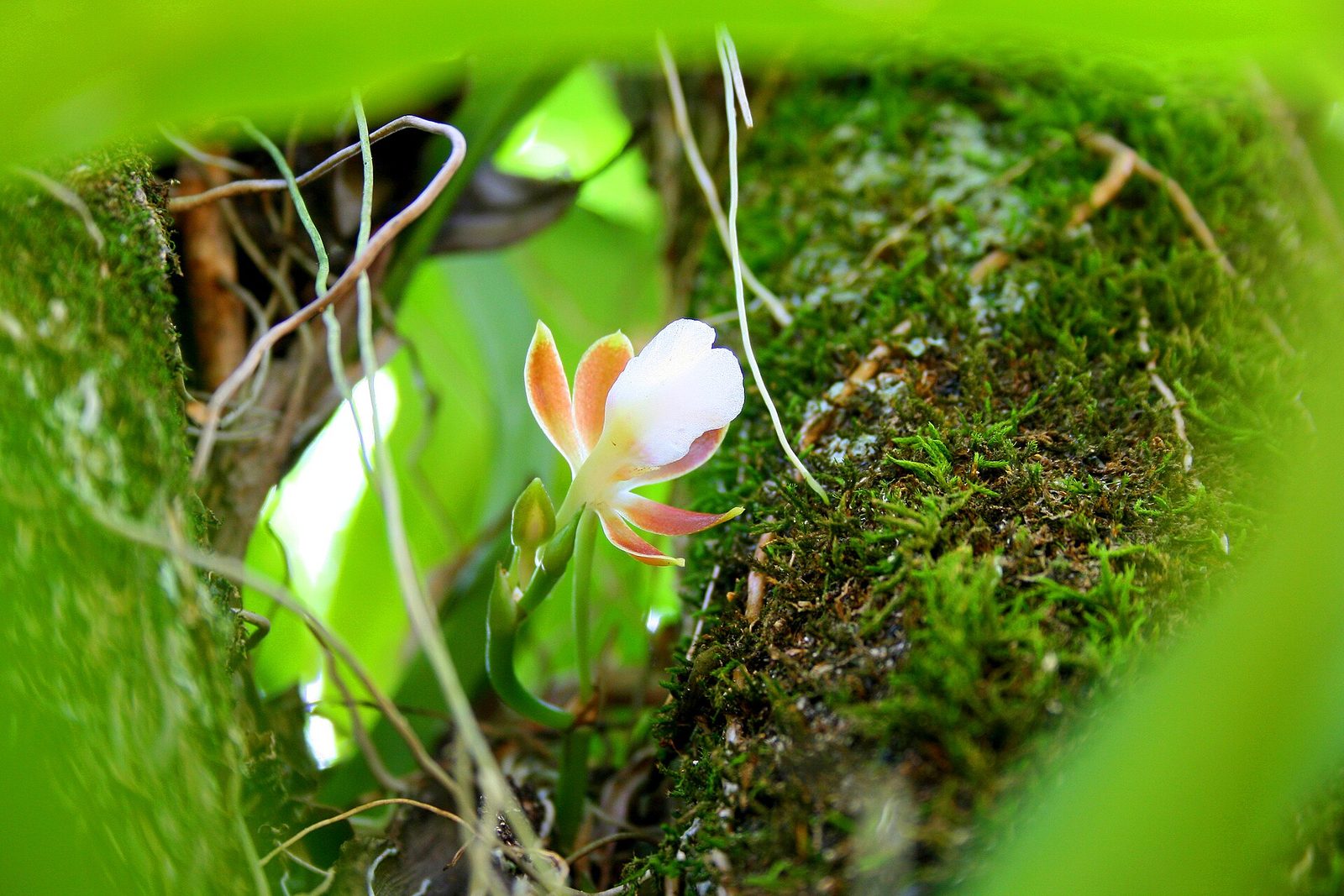
All of this depends on water, and the Atlantic Forest above Paraty has water in abundance. The mountains wring rain out of the sea air almost daily in the wet season, and the forest holds that water, in its soil, its moss, its bromeliad tanks, its deep litter, and releases it slowly into the streams that gather, eventually, into the seven waterfalls the reserve is named for. A wet forest is a sponge as much as a garden, and the two roles are the same thing seen from different angles.
A wet forest is a sponge as much as a garden, and the two roles are the same thing seen from different angles.
This is also the layer where the forest reaches the senses most directly: the smell of wet leaf litter, the drip and trickle of water, the softness of moss underfoot, the green underwater light. It is the reason a slow walk here does something to a person that a fast one never will, and it is worth slowing down for even if you never learn a single plant's name.
Useful plants, and an ethic of observing
People have drawn on this forest for a very long time. The Indigenous peoples of the coast, and the caicara communities who came after them, built a deep knowledge of which plants feed, heal, build, and dye, and much of that knowledge survives. Walk with someone who grew up here and the green wall turns into a pharmacy and a pantry at once: this bark for a fever, that leaf for the stomach, this fiber for a basket, that fruit in its season.
A few names come up again and again in the folk medicine of the region. Espinheira-santa is taken for stomach complaints. Pata-de-vaca, the cow's-hoof tree named for its split leaf, has a long reputation in teas. The copaiba tree yields a medicinal oil tapped from its trunk; jatoba and various barks and resins have their traditional uses; and any number of leaves are brewed for coughs, aches, and sleeplessness. Some of these traditions are now being studied seriously by scientists, and a handful have real pharmacology behind them.
Two cautions belong with all of this. The first is medical: folk remedies are not a substitute for a doctor, doses and correct identification matter enormously, and several useful plants have poisonous look-alikes. Nothing in this guide is advice to treat yourself from the forest. The second caution is about conservation, and for a visitor it is the more important of the two.
- Take pictures, not plants. A photograph carries the whole memory home and leaves the forest intact for the next person and the next generation.
- Never dig up orchids, bromeliads, ferns, or seedlings. They rarely survive the move, and collecting has already emptied too much accessible forest.
- Do not strip bark, tap trunks, or cut palm heart. What feels like a small souvenir becomes, multiplied across many visitors, a real wound to the forest.
- Leave seeds, nuts, and fruit where they fall. They are somebody's dinner and the forest's next generation of trees.
The old harvesting knowledge is precious, and so is the forest it came from. The way to honor both, as a guest here, is to learn the plants, admire them closely, and take nothing away but the knowing. A forest observed is a forest left whole; a forest harvested by everyone who passes is a forest slowly emptied.
What threatens this flora
It would be dishonest to write about the plants of the Atlantic Forest without being plain about the pressure they are under. This is a forest that has already lost most of itself, and the forces that took it are, for the most part, still at work along its edges.
The largest of them is fragmentation. When forest is cleared for pasture, farms, and towns, what remains is left in islands, and an island of forest is a poorer, more fragile thing than the same area joined to the whole. Edges dry out and let in wind, weeds, and fire. Big trees marooned on a small fragment cannot always find their pollinators or the animals that carry their seed. Species that need room to move are cut off, and the plants that depend on them suffer in turn. A thousand acres in one connected piece is worth far more, for the flora, than the same thousand acres scattered in twenty separate lots.
Then there is direct taking. Palm-heart poaching has stripped the jucara from forests within reach of a road. Orchid and bromeliad collectors have done the same to the showier epiphytes, prying them off trunks by the sackful. The old timber trees, cedar and rosewood and brazilwood, were logged out of most of their range long ago, and illegal cutting still reaches the survivors. Even the tree ferns were harvested to the edge of trouble for the orchid-mounting trade. A forest can keep all its trees standing and still be quietly emptied of its rarest plants.
On top of all this sits a changing climate. A forest built on reliable, heavy rainfall and cool mountain mist is sensitive to shifts in both, and the high cloud forests of the Serra do Mar, where so many of the rarest, dampest-loving plants live, have nowhere higher to go if the clouds lift and the mist thins. The plants that make this forest special are often the ones with the narrowest tolerances and the smallest ranges, which is exactly what makes them hardest to replace.
The list is sobering, but it points clearly at the remedy. Every one of these threats is answered by keeping forest standing, connected, and unpoached. That is not an abstract goal here; it is the daily, practical work of running the reserve, and it is the reason a place like this exists at all.
How to see the flora well
The best way to appreciate this forest asks almost nothing of you except a change of pace. The plants are not going anywhere; the trick is to slow down enough to meet them. A few simple habits will show you more in an hour than a hurried march shows in a day.
- Walk slowly, and stop often. Most of the forest's detail is invisible at a normal walking speed and obvious the moment you stand still.
- Look at every scale. Sweep the canopy for emergents and flowering crowns, scan the trunks and branches at eye level for epiphytes, then study the mossy ground and fallen logs for the smallest orchids and ferns.
- Bring a hand lens, or use your phone's zoom. Half the wonder of this flora is in flowers only a few millimeters across.
- Go out after rain, and early. The forest is at its most fragrant and most active when it is wet and the light is low.
- Learn a handful of families rather than a hundred species. Once you can tell a bromeliad from an orchid from an aroid, the whole forest begins to organize itself for you.
There is a deeper way to be here, too, one that has less to do with naming things and more to do with simply being among them. Sitting quietly in the forest, letting the green and the sound of water and the smell of wet earth do their slow work, is restorative in a way that is now fairly well studied, and it is the whole idea behind forest bathing. You do not have to identify a single plant to feel the good of it. Some of the best time you will spend on these trails is spent sitting still with your notebook closed.
And if you do want to put names to things, the best company is a guide who knows the ground. Much of what is written here comes alive only when someone can point to the actual tree, the actual orchid, the actual killed-and-regrown palm. Reading about a strangler fig is one thing; standing inside the hollow shell of one is another.
The forest that the reserve keeps
It is worth ending where the reserve itself began. For close to three hundred years there has been a farm on this land, growing bananas in the organic, low-key way that leaves the surrounding forest standing rather than clearing it away. That choice, to keep the forest, is why the flora in this guide is here to be seen at all. The banana groves sit in their clearings at the forest's edge; behind and above them rise hundreds of acres of Atlantic Forest, held unbroken, climbing toward the waterfalls and the mountains beyond.
Everything in these pages depends on that decision, renewed year after year. The tank bromeliads with their frogs, the miniature orchids in the moss, the old figs and jequitibas, the jucara palms growing quietly toward seed, the manaca and the ipe turning color in their seasons: none of it survives in a landscape that treats forest as something to be cleared. All of it thrives in one that treats forest as the point.
As a guest, you are part of keeping that going. Staying in a low-impact chalet inside standing forest, walking the trails slowly and taking nothing, learning the plants and leaving them exactly where they grow, is conservation that happens to feel like a holiday. If you would like to see it for yourself, our stays and booking page has what you need to plan a visit, and the rest of our local guides will help you read the birds, the wildlife, the waterfalls, and the wider Mata Atlantica once you arrive.
Come and read the forest in its layers. Learn a few of its plants by name. Then sit down somewhere green and wet and let the rest of it stay wonderfully, rightly beyond you. That is the honest pleasure this forest offers, and it is exactly the pleasure the reserve exists to protect.