
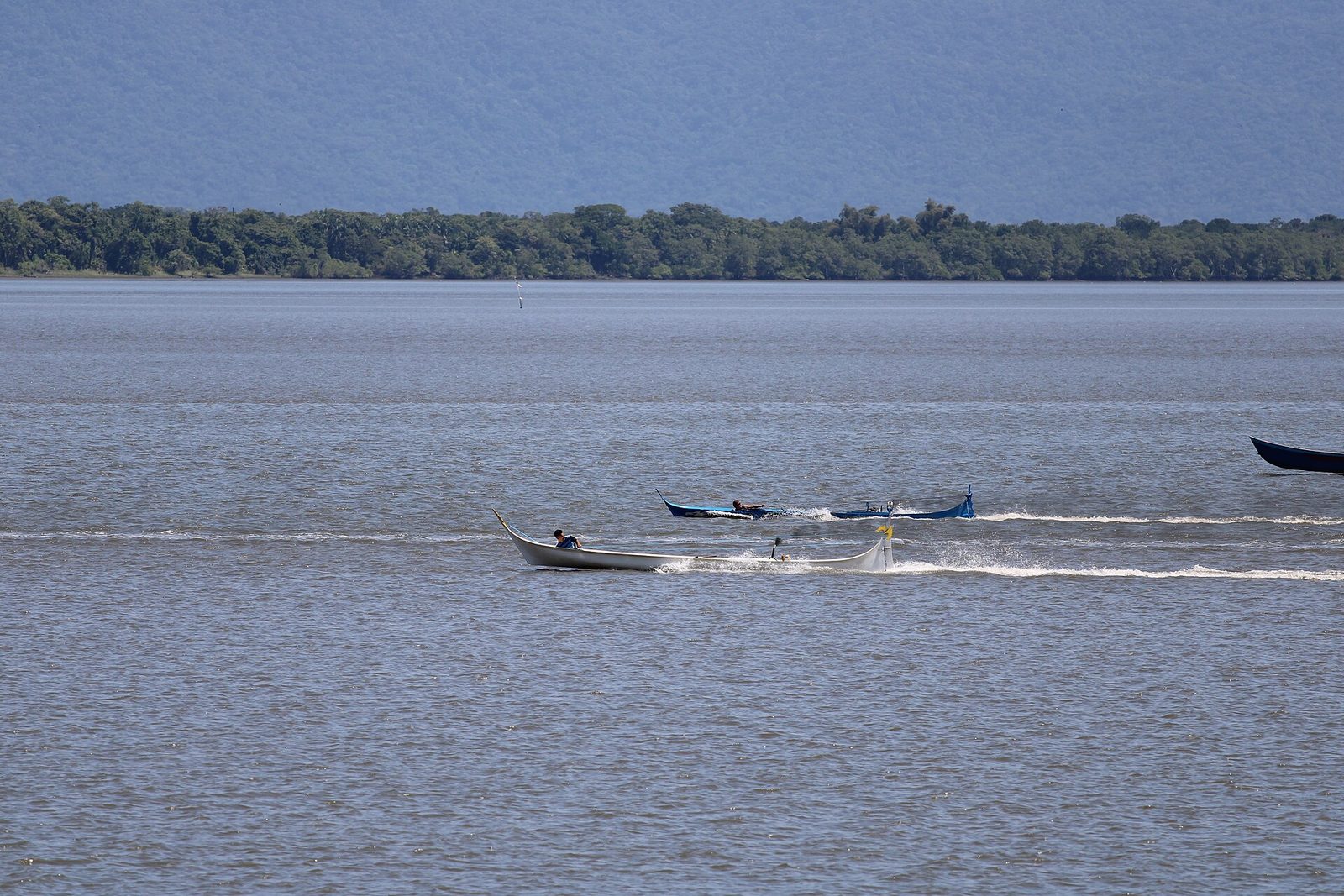
Long before there was a town at Paraty, a road over the mountains, or a country called Brazil, there were people living along this coast who knew it the way you know your own hands. They fished the bay by the phase of the moon, cleared small gardens in the forest and let them rest, carved canoes from single trees, and passed down by voice everything a person needed to live well between the mountains and the sea. Their descendants are still here. They are the caiçara, and the culture they built is one of the living treasures of the Costa Verde, as much a part of this place as the Atlantic Forest itself.
This guide is an introduction to that culture, and to the wider web of traditional communities who share this coast: the caiçara fishing and farming families, the quilombos founded by Afro-Brazilians who freed themselves from slavery, and the Guarani Mbyá, whose presence here runs deeper in time than all the rest. We write about them with care, because they are not a display arranged for visitors. They are neighbors, working communities with their own lives, their own knowledge, and their own long arguments over land and a changing coast. The best thing a traveler can do is meet them on those terms.
We also write about them because there is a great deal to learn from them. This reserve is an 800-acre conservation project built around a banana grove that has been worked for close to three hundred years, which is to say, built around exactly the kind of small, forest-wise agriculture the caiçara have practiced on this coast for generations. The longer you look at how these communities have lived in the Atlantic Forest without using it up, the more the modern word conservation starts to look like something people here have been doing, quietly and without the word, for a very long time.
- Who
- the caiçara, the traditional coastal people of southeastern Brazil, of blended Indigenous, Portuguese, and African descent
- Where
- the coast and islands from Rio de Janeiro through São Paulo to Paraná, with Paraty near the heart of it
- Living
- artisanal fishing paired with small forest gardens, the roça, built on cassava and banana
- The canoe
- the canoa caiçara, a dugout carved from a single tree trunk
- The staple
- cassava, or mandioca, processed into flour in a casa de farinha, the flour house
- The music
- the fandango caiçara, sung to the viola and danced in wooden clogs, recognized as part of Brazil's intangible heritage
- Near Paraty
- the Quilombo do Campinho da Independência, a land-titled Afro-Brazilian community that welcomes visitors
- Also here
- Guarani Mbyá villages, the enduring Indigenous presence on this coast
Who the caiçara are
The word caiçara names the traditional coastal people of southeastern Brazil, the communities who have lived along the shore and islands from Rio de Janeiro down through São Paulo to the coast of Paraná for many generations. Paraty sits close to the heart of that stretch. To call someone caiçara is to say something about how a family has lived and what they know, more than where a line is drawn on a map: it means a way of life tied to the tide line, the fishing grounds, the small forest garden, and the canoe.
The name itself carries the history. It comes from the Tupi language of this coast, from words describing the fence of stakes and branches that Indigenous people set in the shallows to trap fish. Over time the term for that structure of the shore came to mean the people of the shore, and then the particular mixed coastal culture that grew here after the Portuguese arrived. A name born from a fish weir is a fitting one for a people whose lives have always turned on the meeting of land and water.
The three roots
Caiçara culture grew from three peoples meeting on one coast. The oldest root is Indigenous, above all the Tupi and Guarani peoples who lived and fished here long before any European sail appeared, and whose knowledge of the forest, the tides, and the crops is the foundation everything else was built on. The second root is Portuguese, the colonists and their descendants who settled the coast from the sixteenth century onward, bringing their language, their Catholic feast days, sugarcane, and boatbuilding traditions of their own. The third root is African, the people brought to this coast in bondage to labor on the cane and in the ports, whose foodways, rhythms, and words are woven all through coastal culture.
Out of that meeting, over centuries, came something genuinely new. The caiçara are not simply one of those three things; they are the particular culture that formed where the three overlapped on a narrow, forested, sea-facing strip of land. That is worth saying plainly, because it is easy to flatten a living people into a postcard. The caiçara are a mixed, modern, and specific people with a history of their own, and their culture is best understood as an achievement rather than a leftover.
A people of the shoreline
Geography shaped everything. The Serra do Mar rises steeply almost straight out of the ocean here, leaving only a thin ribbon of flat coast and a scatter of pocket beaches, river mouths, and islands. There was never room for great plantations along most of this shore, and never an easy way to move heavy goods over the mountains. So the caiçara made their living from what the narrow coast actually offered: fish and shellfish from a rich, sheltered sea, and a small garden cut into the forest behind the beach. A caiçara household was, classically, both a fishing family and a farming family at once, turning to the water or the land as the season and the weather asked.
That double life, half in the sea and half in the forest, is the thread that ties all of caiçara culture together. Everything that follows in this guide is really an unfolding of that one fact: a people who learned to live, and live well, on the seam between the Atlantic Forest and the Atlantic Ocean.
Living by the tide, the wind, and the moon
The deepest thing the caiçara possess is not an object but a body of knowledge, built up over generations and carried in the head and the hands. Scientists have a cool phrase for it, traditional ecological knowledge, but on the ground it is simply knowing your place completely: which wind brings which weather, when a particular fish will run, which moon is right for planting and which for cutting wood, where the current sets around a headland, which forest plant heals and which harms. None of it was written down. All of it was learned by doing, beside someone older, and it is precise enough to keep a family fed and safe on a coast that does not forgive carelessness.
A calendar written in water and sky
A caiçara fisherman does not need a printed tide table. The moon gives it to him. The big spring tides that come with the new and full moon, and the gentler neap tides between, govern when to set a net, when to gather shellfish on an exposed flat, when a canoe can cross a bar and when it cannot. The winds have names and meanings: the one that flattens the sea and the one that kicks it up, the one that clears the sky and the one that brings days of rain. Reading them right is the difference between a good day's fishing and a dangerous one, and older fishermen can feel a change coming hours before it arrives.
The same close reading applies on land. There are moons thought right for planting and moons thought right for felling a tree so the wood will cure hard and resist rot and insects, a piece of lore that turns out to matter a great deal when you are choosing the trunk for a canoe that must last for years. Fruiting and flowering in the forest mark the turning of the seasons more reliably than any calendar.
The roça and the wisdom of letting land rest
On the land side, the caiçara kept a small shifting garden called the roça. In the traditional system, a family would clear a modest patch of forest, use the ash to feed the soil, plant it for a few seasons with cassava, beans, corn, banana, and other staples, and then let it go back to forest while they opened a new patch elsewhere. The old plot lay fallow for years, sometimes many years, and the forest grew back over it, restoring the soil, so that it could be used again a generation later. It is a rotation, not a conquest.
Practiced this way, by few people with long rests between plantings, it sat lightly on the forest and could continue almost indefinitely, which is precisely how it did continue for centuries. This is the same low-impact, forest-friendly logic that keeps a three-hundred-year-old banana grove alive on this reserve, and it is no accident that banana is a caiçara mainstay. The history of that kind of patient, small-scale agriculture on this exact land is told on our history of the Sete Quedas valley page. The roça is one of the clearest examples anywhere of people using the Atlantic Forest without destroying it.
What we now call conservation, the caiçara have been practicing on this coast, quietly and without the word, for a very long time.
The canoa caiçara: a canoe from a single tree
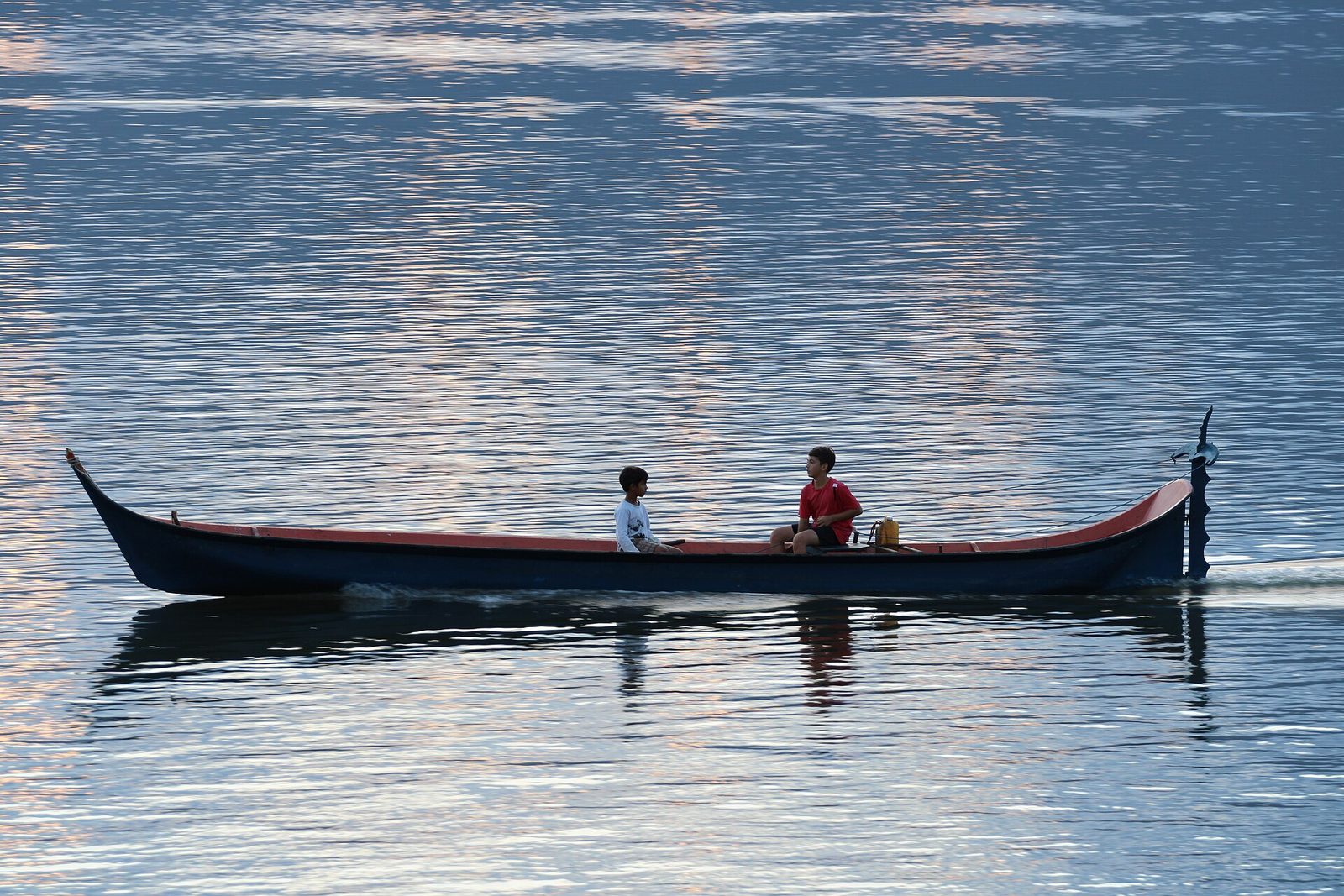
If one object stands for caiçara culture, it is the canoe. The canoa caiçara is a dugout, carved from a single tree trunk, hollowed and shaped by hand into a light, sea-worthy hull. For most of the history of this coast it was the only practical way to move: to reach the fishing grounds, to cross the bay, to carry a garden's harvest down to a village, to visit family on the next beach, to reach the islands. Where the mountains met the sea and there were no roads, the canoe was the road.
These are not crude hollow logs. A good caiçara canoe is a refined piece of craft, its lines worked so that it sits right in the water, holds its course, takes a wave without swamping, and answers to a single paddle. The knowledge of how to make one, which tree, which moon to fell it, how to open and spread the hull, how to balance it, is exactly the kind of learning that lives in the hands of a few skilled builders and is passed on by working beside them.
At dawn, a fisherman slides a canoe off the sand and paddles out over water still flat and gray, reading the surface for the swirl or the flash that says where the fish are holding. It is quiet work, and old, and on a calm morning it looks almost exactly as it would have looked centuries ago.
One trunk, many weeks
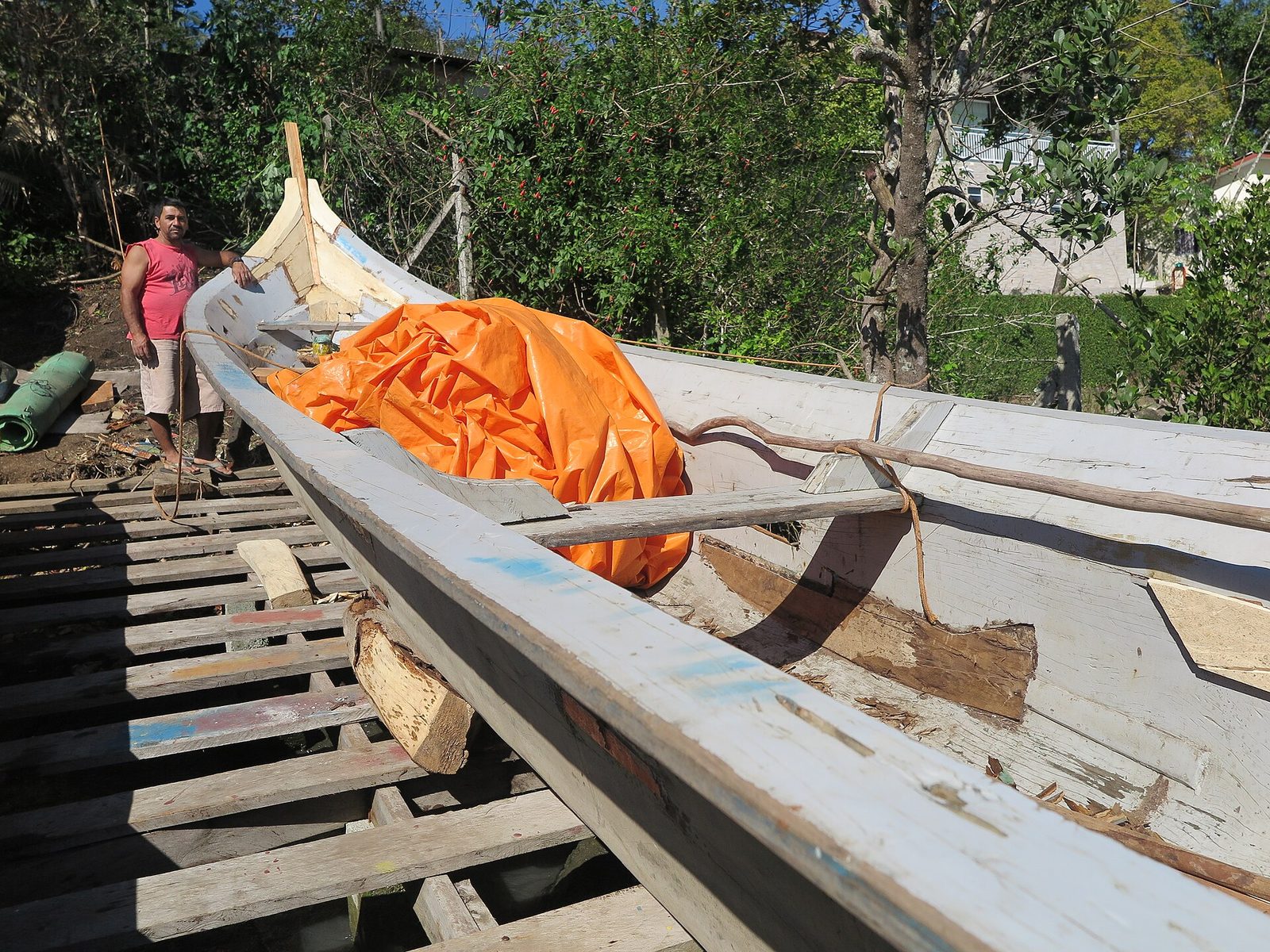
Building a dugout begins with the tree. The classic choice on this coast is a light, workable wood, often the guapuruvu, a fast-growing forest tree whose soft, buoyant timber can be hollowed without impossible labor and floats high once shaped. The builder fells the chosen trunk, and then the long work begins: roughing out the shape with axe and adze, hollowing the inside a careful layer at a time, thinning the walls to the right, even thickness so the hull is light but strong. Some builders open and widen the hollowed log with heat and water and braces, spreading the sides to a fuller shape than the original trunk allowed.
It is weeks of skilled, patient work, and it is usually done in the shade near the house or the shore, the half-finished hull kept under a shelter or a cover between sessions so the wood does not check and split as it dries. There is no substitute for the maker's eye and feel; the thickness of a wall, the run of the sheer line, the balance of the whole, are judged by hand and experience rather than measured off a plan.
What the canoe still carries
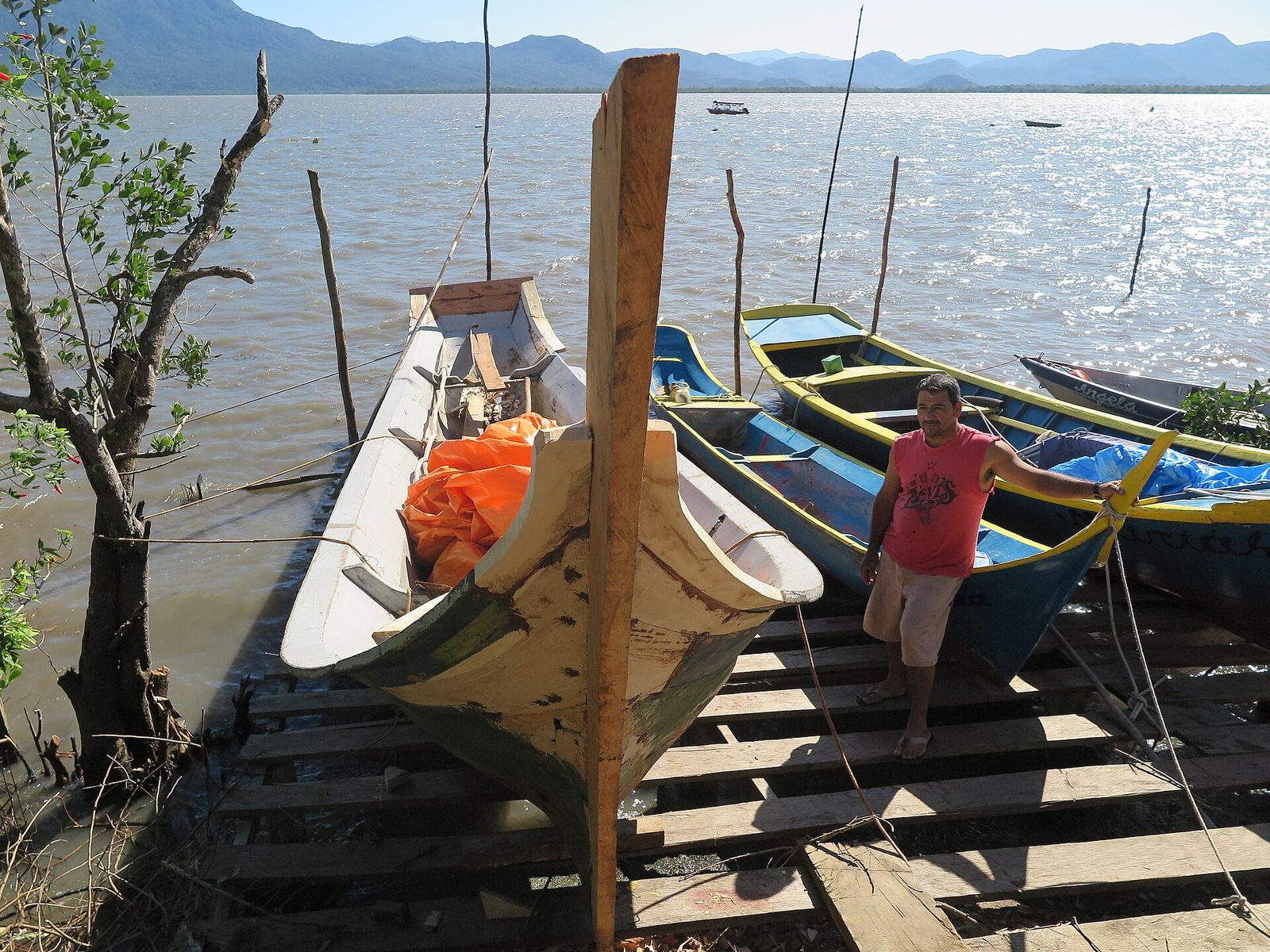
Fewer canoes are built now than a generation ago. Fiberglass and aluminum boats with outboard motors are faster and ask less of their owners, and the big trees suitable for a dugout are scarcer and, rightly, protected, so that cutting one is no longer a simple matter. A whole body of knowledge, of trees and tides and the feel of an adze, is genuinely at risk of thinning out. Yet the canoe has not vanished. Working dugouts still rest on beaches up and down this coast, and in some communities the old canoes have found a second life at the center of cultural life, raced in regattas and kept as a point of pride and identity.
When you see caiçara canoes drawn up on the sand between tides, it is worth pausing over what each one represents: a particular tree, a particular builder, weeks of hand labor, and a lineage of knowledge reaching back through the whole history of this coast. A dugout holds a whole library inside a single hollowed trunk, of which trees to trust, which tides to ride, and how much a person can do with patience and a sharp blade.
Cassava and the flour house
On the land side of caiçara life, one plant stands above all others: cassava, known here as mandioca, and in some forms as aipim or macaxeira. It is the true staple, the reliable calorie that a forest garden can produce in poor soil with little fuss, storing itself in the ground until it is needed. Cassava came to the caiçara from Indigenous agriculture, and with it came an ingenious technology for making it safe to eat, because one of the two broad kinds of cassava is, in its raw state, quietly poisonous.
Turning a dangerous root into daily bread
There is a sweet cassava that can simply be boiled and eaten, and there is a bitter cassava that contains natural compounds which release cyanide and must be processed before it is fit for a person. The traditional method, inherited from Indigenous practice, is a small marvel. The roots are peeled and grated to a wet pulp. The pulp is packed into a press, in the oldest form a long woven sleeve of palm fiber, the tipiti, which squeezes out the toxic liquid as it is stretched. What is left is a damp meal, now safe, which is then toasted on a wide, hot pan, stirred constantly until it dries into the coarse, keeping flour called farinha.
Farinha is the backbone of the caiçara table and of Brazilian country cooking generally, sprinkled over almost everything, toasted with butter into farofa, or stirred into hot broth to make pirão. From the starch settled out of that pressed liquid come other foods again, the little tapioca crepes and the flat beiju. That a poisonous root is turned, through knowledge alone, into the most dependable food on the coast is one of the quiet triumphs of Indigenous and caiçara ingenuity.
The flour house as a gathering place
All of this happened, and in places still happens, in a building called the casa de farinha, the flour house. It held the grater, the press, and above all the great toasting pan set over its fire, and turning a harvest of cassava into flour was heavy, hot, hours-long work that a single family often could not manage alone. So the flour house was a social place as much as a workshop. Neighbors came together to get the job done, the work went faster for the company, and stories, news, courtship, and songs moved around the pan along with the stirring paddle.
The casa de farinha survives as a powerful symbol of the traditional coast, and it is no coincidence that community tourism projects on this coast, including at the well-known quilombo near Paraty, often center on a working flour house. To watch cassava become farinha is to watch a piece of living history, and to understand at a glance why food, work, and community were never really separate things in caiçara life.
What the caiçara eat
Caiçara food is exactly what you would expect from a people living between the forest and the sea: fish from the water, cassava and banana from the garden, and a spirit distilled from the cane that grows on the lowlands. It is honest, resourceful cooking, built on what is fresh and near at hand, and it is one of the most enjoyable ways for a visitor to encounter the culture directly. Our fuller guide to the food of the region, from the fishing beaches to the old distilleries, lives on the Paraty food and cuisine page.
The everyday plate
Fish is the heart of it, as fresh as it comes, grilled whole or turned into a moqueca, the slow coastal stew of fish or shrimp with tomato, onion, and coriander, served with rice and a bowl of pirão thickened from its own broth. Shellfish gathered from the rocks and flats round out the sea's share. From the land comes cassava in all its forms, farinha on everything, plus beans, squash, and greens from the roça. And there is banana, everywhere, green and starchy for cooking or sweet and ripe for eating, which feels close to home for us, since we spend our days tending a banana grove three centuries old in the hills above this coast.
To drink, alongside coffee, there is cachaça, the spirit distilled from fermented sugarcane juice, so bound up with this coast that Paraty's name was once used as a byword for good cachaça. Caiçara smallholders grew cane and small distilleries turned it into a spirit that traveled and sold well, and the tradition is very much alive in Paraty's distilleries today.
Azul-marinho and the green banana
The dish that best captures caiçara cooking is azul-marinho, and it ties two of the region's staples together beautifully. Fish is stewed with green banana, and something in the green banana's skin darkens the broth to a deep blue-gray as it cooks, which is where the dish gets its name, meaning navy blue. It is usually served with pirão and a farofa made with banana, a whole meal drawn almost entirely from the caiçara garden and the caiçara sea, and it exists nowhere in the world in quite this form except on this coast.
A dish like azul-marinho is worth seeking out precisely because it is not on every menu. Where you find it, you are usually eating in or near a community that still cooks its own tradition, often at a family kitchen or a community restaurant rather than a tourist spot. Ordering it, and paying fairly for it, is one of the simplest and most respectful ways to support the culture that made it.
The fandango caiçara
When the work was done, the caiçara danced. The fandango caiçara is the traditional music and dance of this coast, an old, distinctive form that has been formally recognized as part of Brazil's intangible cultural heritage. It is strongest to the south, on the coasts of São Paulo and Paraná, but it belongs to the whole caiçara world, Paraty included, and it is one of the most vivid expressions of the culture still alive today, kept going by dedicated fandango groups, families, and festivals.
The viola, the rabeca, and the wooden clogs
The sound of the fandango starts with the viola caiçara, a small guitar-like instrument with paired strings and a bright, ringing tone, often joined by the rabeca, a folk fiddle, and a large frame drum. Over the instruments come the sung verses, and then the dancers. In the most striking form, the batido, the dancers wear tamancos, wooden clogs, and stamp out the rhythm on a wooden floor, so that their feet become a percussion instrument and the whole dance floor booms in time. In the gentler bailado form, couples dance smoothly without the clogs. The dances are not free improvisation; there are dozens of named figures, each with its own steps and song, and a good fandango moves through them one after another late into the night.
To hear a viola and rabeca strike up and a row of clogs come down together on a plank floor is to understand at once that this is not a performance invented for tourists. It is a genuine folk tradition with deep roots, physically demanding, joyful, and communal, and it rewards a respectful listener enormously.
Born from shared work
The fandango was not, in origin, a concert. It grew out of the way caiçara communities got big jobs done. When a family needed to clear a field, raise a house, or bring in a harvest, neighbors came to help in a collective work party, a mutirão, and the host repaid that labor not with money but with a feast and a fandango that night. The dance was the thank-you, the celebration, and the social glue that held a scattered coastal community together. Work and music were two halves of the same event.
That origin explains why the fandango matters as more than entertainment. It is tied to a whole way of living in which people depended on one another and settled their debts in labor and hospitality rather than cash. As paid work and modern life have loosened those ties, the fandango has had to fight to survive, and the fact that it has survived, carried by people who refuse to let it go, is itself a form of cultural resistance. Encountering it through a local group or a community festival, on its own terms, is a privilege worth arranging your trip around.
Words and knowledge kept by voice
Caiçara culture was, and largely still is, an oral culture. For most of its history almost none of it was written down; it lived in speech, in songs, in stories told at night, and in the hands of people who knew how to do things. That includes the practical knowledge already described, the fishing and the farming and the boatbuilding, but it also includes a whole world of language, story, belief, and healing that passed from the old to the young by word of mouth.
The Portuguese spoken by caiçara communities carries its own accent and its own vocabulary, shaped by isolation on a coast where neighbors were reached by canoe rather than road, and salted with words from Tupi and from African languages. Many of those Indigenous words long ago spread into the everyday Portuguese of all Brazil, so that speakers use them without a thought to their origin, a quiet monument to how much of this country's daily language comes from its first peoples.
Words kept from the first languages
A great many ordinary Brazilian Portuguese words come straight from Tupi and related Indigenous languages of this coast: mandioca (cassava), abacaxi (pineapple), caju (cashew), pipoca (popcorn), mingau (porridge), capivara, jacaré, tatu, arara, and tucano among countless others. The name caiçara itself comes from Tupi, and so does the name Paraty. When you use these words, you are speaking, in small part, the language of the people who lived here first.
Alongside language went belief and healing. Coastal communities kept their own folk Catholicism, with saints' feast days and processions, blended with older beliefs, and they kept healers, often older women, who knew the medicinal plants of the forest and the words and blessings that went with them. Stories of the forest and the sea, of enchanted places and creatures, gave a moral and imaginative map of the landscape. All of this was fragile precisely because it was unwritten, and much has been lost, which is why the communities and researchers now working to record fandango verses, canoe-building, plant knowledge, and old speech are doing something genuinely important.
The quilombos of the Paraty coast
The caiçara are not the only traditional people of this coast. Woven through the same landscape are the quilombos, communities founded by Afro-Brazilians who freed themselves or their ancestors from slavery, and who built independent settlements where they could farm, fish, and live on their own terms. Brazil was the last country in the Americas to abolish slavery, and the Paraty region, tied to the colonial gold route and the sugar and cane economy, was shaped by enslaved African labor. The quilombos are the living descendants of the people who resisted that system, and their culture shares much with the caiçara world around it while keeping its own distinct African-rooted heritage.
Campinho da Independência
The best known of them near Paraty is the Quilombo do Campinho da Independência, a community on the road that runs from Paraty toward Trindade and the southern beaches. Campinho holds an important place in Brazil's recent history: in 1999 it became one of the first quilombo communities in the state of Rio de Janeiro to win definitive collective title to its land, a landmark in a long national struggle by quilombos to have their territories legally recognized. Collective title means the land belongs to the community as a whole and cannot simply be bought up and broken apart, a hard-won protection on a coast where land has become extraordinarily valuable.
Campinho is also widely known for community-based tourism run by the residents themselves, through their own association. Visitors can come to learn about the community's history and daily life, walk forest trails with local guides, see traditional cassava processing at a flour house, eat a meal of local food, and buy crafts made in the community, including baskets and objects woven from forest fibers. Crucially, this is tourism the community controls and benefits from directly, rather than something done to it. To visit Campinho well is to come as a respectful guest, to listen, to buy directly from the makers and cooks, and to pay a fair price without haggling, understanding that you are supporting a community's right to remain on its own land.
Campinho is the most visible, but it is not the only quilombo in the region; other Afro-Brazilian communities live along this coast and in the hills, each with its own history. Together they are a reminder that the culture of the Costa Verde was built by African hands as much as any other, and that the descendants of the enslaved are not a closed chapter of history but present, organized communities with a claim on the future.
The Guarani Mbyá, the coast's first people
Older on this land than the caiçara, the quilombos, or the Portuguese are the Indigenous peoples, and their presence here did not end with the colonial era. The Guarani Mbyá, part of the wide Guarani family whose territory once stretched across much of southern South America, live today in villages along this coast, including in the forests and hills of the Paraty area, near the southern beaches and river valleys. They are a distinct people with their own language, spirituality, and way of life, not to be confused with or folded into the caiçara, even though the caiçara carry Indigenous ancestry of their own.
The Guarani Mbyá are known for holding tightly to their language and their religious life, centered on the prayer house and a spiritual understanding of land and migration that has kept them moving and enduring across centuries of pressure. Their villages, called tekoá, are places to live according to their own way, and they have faced the same forces that press on every traditional community here: shrinking territory, encroaching development, and the difficulty of maintaining a distinct life in the middle of a booming tourist coast. Some communities have taken up carefully managed cultural tourism and the sale of their fine craftwork, particularly basketry and carved animals, as a way to earn a living while protecting their autonomy.
Because these are small communities with a hard history of contact, the respectful path is clear and worth stating plainly. Do not simply turn up at a village uninvited, and never treat people as a photo opportunity. If you wish to learn about Guarani culture or buy Guarani crafts, do it through the community's own invitation and channels, on visits that the community itself has chosen to offer, paying fairly and directly. The goal is always to support their right to live as they choose, not to consume their difference. Handled that way, an encounter with the Guarani Mbyá is a rare chance to meet the coast's oldest living human presence with the dignity it deserves.
The pressures on a way of life
It would be dishonest to present all this as an untroubled idyll. Caiçara, quilombola, and Guarani communities are under real and sustained pressure, and have been for decades. Their traditional way of life depended on having access to land and sea and on a certain amount of quiet and space, and all three have become scarce and contested on a coast that the rest of Brazil, and the world, has discovered. The people who kept this coast alive for centuries are now, too often, the people most at risk of being pushed off it.
Land, and what the coast is now worth
The core problem is that land here has become immensely valuable. Beautiful beaches, forested hills, and clear water that once supported fishing families are now prime ground for vacation homes, resorts, and speculation. Because traditional communities frequently held their land by long use and custom rather than by formal deed, they have been terribly vulnerable to being bought out, pressured, fenced off from beaches they always used, or simply displaced by those with money and lawyers. The village of Trindade, south of Paraty, is a well-known example of a caiçara community that faced exactly this kind of land pressure and organized to resist losing its home; you can read more about that village and its beaches on our Trindade village and beaches page. Cases like it have played out up and down this coast.
The result is a painful squeeze. Young people, finding it hard to make a living from fishing and farming as land shrinks and rules multiply, move to town for wages, and each departure thins the community and the knowledge it carries. The very beauty that makes this coast worth protecting is what draws the pressure that threatens the people who protected it.
When a park and its people collide
There is a second pressure, and it is a genuinely hard one, because it comes from conservation itself. Over the past half-century, much of this coast and its mountains has been placed inside protected areas, national and state parks and reserves created to save the Atlantic Forest. That protection is real and valuable, and this reserve exists in the same spirit. But when strict protected areas were drawn around lands where caiçara and other traditional families had always lived, the rules meant to guard the forest sometimes fell hardest on the people who had guarded it longest, restricting the fishing, the shifting garden, and the gathering of wood and building materials that their way of life depended on.
This is the uncomfortable knot at the center of conservation on this coast: the same forest is both a home and a park. Over time, Brazilian law and practice have come to recognize traditional peoples and their right to remain in and use protected areas, and newer approaches try to make the communities partners in protection rather than obstacles to it, which is far closer to the truth of who kept these forests standing. But the tension is not fully resolved, and it is a live issue in many communities today. A visitor who understands it will see the landscape more clearly, and will understand why community-led tourism, which lets people earn a living from the forest by protecting it, matters so much.
How to visit, and how to buy crafts, with respect
All of this leads to a simple, practical question for a traveler: how do you encounter these living cultures well? The answer is a change of posture more than a set of rules. The wrong way is to treat communities as scenery, to photograph people like wildlife, to bargain hard over a craft that took days to make, or to expect a private way of life to perform for you. The right way is to come as a guest, to go where you are invited, to pay fairly and directly, and to understand that your money and your respect can be part of what keeps a culture alive rather than part of what erodes it.
Community-based tourism is the key, and this region is fortunate to have real examples of it. When a community, like the quilombo at Campinho, organizes its own visits, guides, meals, and craft sales, the benefit stays with the people themselves and they keep control of how they are seen. Choosing those experiences over anonymous, extractive ones is the single most important decision a visitor makes. Our broader thinking on traveling lightly and fairly through this whole region is set out on the responsible tourism page, and the practical logistics of the area sit on the Paraty guide.
Visiting with, not looking from a distance
A short code for meeting the living cultures of this coast well: go through the community's own tourism, guides, and events rather than turning up uninvited. Always ask before photographing a person or a home. Buy crafts and food directly from the makers and cooks, and pay the asking price without haggling. Learn a few names and a little history before you go. Understand that a village is a home, not an attraction, and let its people set the terms. Done this way, your visit helps rather than intrudes.
The same spirit applies to crafts. A caiçara canoe paddle or fish trap, a Guarani woven basket or carved animal, a quilombo basket of forest fiber, each carries real skill and real hours, and each is a thread of a culture keeping itself going. Buying one directly from its maker, at a fair price, is a small act of support with an outsized meaning. A few plain habits make all the difference:
- Buy from the maker or the community association, not from a middleman who takes the margin and leaves the community little.
- Do not bargain a handmade object down; the asking price is usually already modest for the work involved.
- Ask about how a piece was made and what it is for; the story is part of what you are taking home, and the interest is welcome.
- Choose food and lodging run by local families where you can, so that your ordinary spending stays in the community.
- Follow the community's lead on photographs, dress, and behavior, especially around ceremonies, homes, and children.
What a conservation reserve learns from the caiçara
We come back, at the end, to why any of this belongs in the guides of a conservation reserve. It is because the caiçara, the quilombolas, and the Guarani are not a separate subject from the Atlantic Forest we protect; they are part of its story, and in a real sense they are among its oldest and best keepers. The forest that survives on this coast survives in no small part because, for centuries, the people living in it used it in ways that let it endure. A reserve that wants to protect this forest has a great deal to learn from how they did it.
Look at the pieces laid out across this guide and a philosophy of land use emerges that modern conservation is only now catching up to. The roça that clears a small patch and lets the forest reclaim it. The canoe carved from one carefully chosen tree rather than a fleet built from a cleared hillside. The garden that leans on cassava and banana, crops that suit the forest rather than fight it. The mutirão that shares labor instead of stripping the land to pay for hired hands. The deep habit of reading the tide, the wind, the moon, and the forest closely enough to take what you need without taking too much. None of this was framed as environmentalism. It was simply how you lived here for the long haul.
This reserve is, in its own modern way, an attempt to honor that same principle: a three-hundred-year-old banana grove still worked organically, an 800-acre property kept as forest and water, a hard cap of twenty-five low-impact chalets so that a small number of guests can fund the protection of a large piece of the Atlantic Forest. We did not invent that logic. We inherited it from the way this coast has been lived in for centuries, and the caiçara are among the people who taught it, whether they were ever thanked for it or not. Recognizing that debt honestly, and pointing our guests toward the communities who still carry the knowledge, is part of what it means to run a reserve here rather than merely a place to stay.
Neighbors on the same mountain
The Costa Verde is not empty wilderness with a few resorts dropped into it. It is a lived-in coast, worked and known and loved by people whose families have been here for many generations and, in the case of the Guarani, for far longer than that. The waterfalls, the forest, the calm bay, and the islands that make this such an extraordinary place to visit are the same landscape that the caiçara, the quilombolas, and the Guarani have called home all along. To see it fully, you have to see them, not as decoration but as the living human half of what makes this coast worth protecting.
From this reserve, high in the mountains above the seven waterfalls, those communities are close neighbors down on the coast, and a stay here is a natural base from which to meet them thoughtfully: a day at the quilombo at Campinho, a meal of azul-marinho at a family kitchen, a fandango if the season and luck allow, a craft bought directly from the hands that made it. We are always glad to help guests plan those encounters in a way that is respectful and that puts something real back into the communities involved. When you are ready, you can plan a stay with us, and you can find the rest of this series, our orientation to the whole region, on the Local Guides page. Come for the forest and the falling water, and leave knowing the people who kept this coast alive long before any of us arrived.