
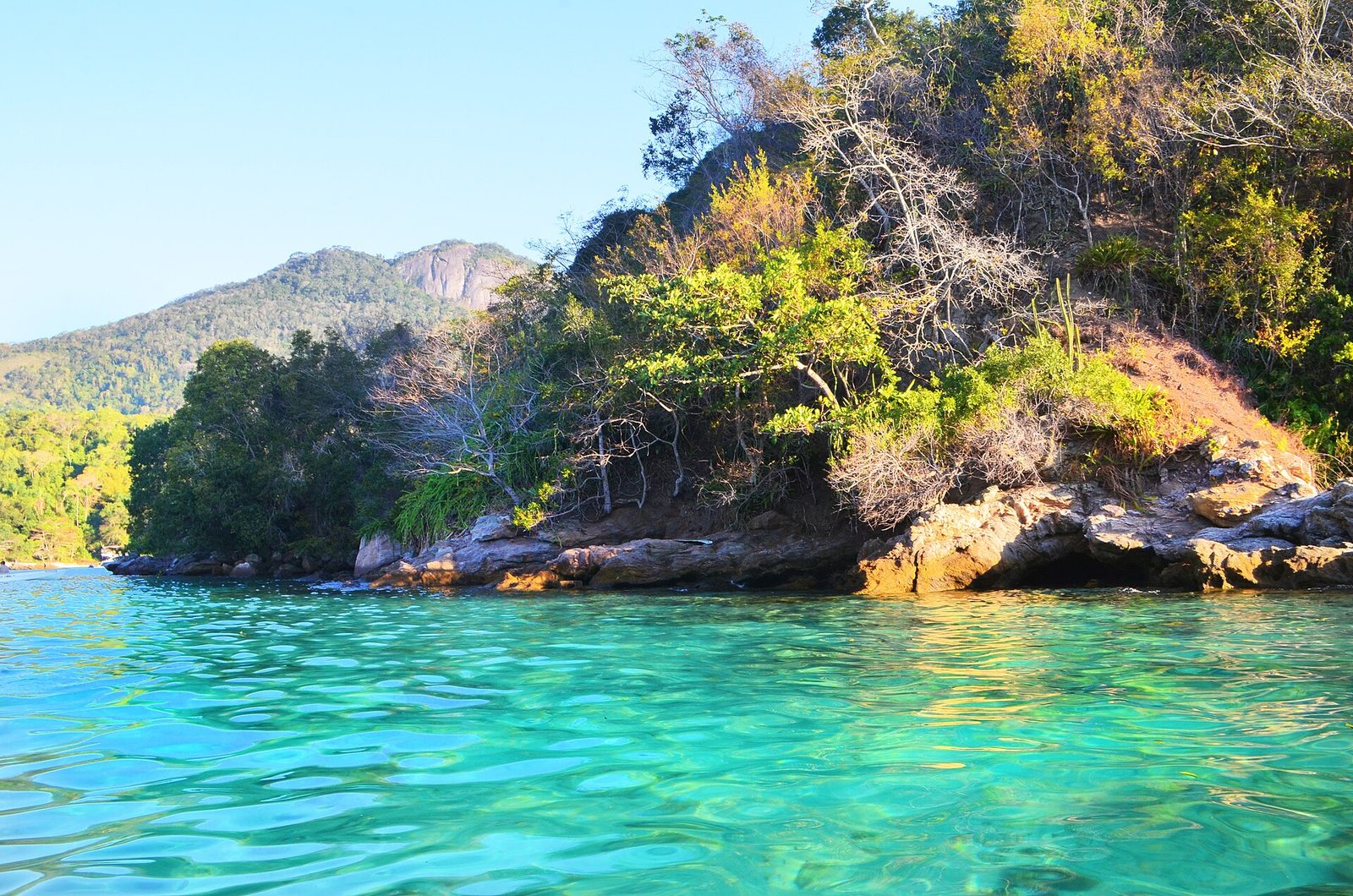
The Costa Verde earned its name honestly. From the deck of a boat, the water reads as a hundred shifting greens and blues, and the temptation to slip over the side and see what lies beneath is almost immediate. This stretch of coast between Rio de Janeiro and the border of São Paulo is a maze of sheltered bays, forested islands, and quiet coves where the Atlantic settles down and turns clear enough to explore with nothing more than a mask and a pair of fins. Paraty sits near the heart of it, and the reserve above the town's seven waterfalls puts you within an easy morning's reach of some of the best snorkeling and diving in the region.
This guide is meant to set honest expectations before it tells you where to go. The waters around Paraty and Ilha Grande are not the tropical coral gardens of Brazil's northeast, and pretending otherwise does no one any favors. What you find here instead is a temperate-to-tropical world of rocky reefs, boulder fields, seagrass meadows, and the occasional wreck, populated by fish that are colorful in their own right and marine life that rewards patience. The visibility comes and goes with the weather and the season. On a good day the clarity is genuinely lovely; after heavy rain it can turn cloudy and green. Knowing that going in is the difference between a magical afternoon and a disappointed one.
Whether you have never put your face in the sea or you carry a dive log and a stack of certification cards, the Costa Verde has a way in. The goal of the pages that follow is to help you match your expectations to the reality of these waters, choose a responsible operator, treat the marine environment with the care it deserves, and come home with the memory of light filtering down through clear green water onto a reef full of quiet, busy life.
What the underwater Costa Verde is really like
Set your expectations by the geology, not by the brochures. The coastline here is drowned mountain range, which means the underwater landscape is built of the same granite and gneiss you see rising green and steep above the waterline. Below the surface that translates into tumbled boulder fields, rocky slopes that drop away from island shorelines, submerged pinnacles, and shallow rock shelves fringed with algae. In the calmer, sandier stretches you find seagrass beds waving gently in the current. It is a handsome, textured environment, and the fish love it, but it is a rocky reef rather than a coral one.
That distinction matters because it shapes everything about a day in the water. Coral needs clear, nutrient-poor, consistently warm water, and the Costa Verde does not reliably offer that. What it offers instead is productive, greener water fed by rivers and the Atlantic forest that crowds down to the shore. The trade-off is real: you give up the postcard clarity of a tropical atoll, and in exchange you get an abundance of life, dramatic underwater terrain, and bays so sheltered that a beginner can float comfortably over a reef in water that barely moves.
Temperature follows the calendar. In the height of the Brazilian summer, roughly December through March, the surface water is warm and welcoming, and many snorkelers happily go in with no wetsuit at all. In winter, from about June through August, the water cools noticeably; it is still swimmable for most people for a while, but a wetsuit or at least a rash guard makes a long session far more pleasant, and divers will want proper exposure protection. The bays also stratify, so it can be warm at the surface and cooler as you drop down a rocky slope.
Because the sea state is generally mild inside the bays, the Costa Verde is unusually forgiving for a temperate coast. The islands break the swell, the coves face away from the open ocean, and on many mornings the water is glassy. That calm is the region's real gift to snorkelers and new divers. It is not a place of pounding surf and dramatic drift dives; it is a place of quiet water, slanting light, and reefs you can linger over.
Snorkeling for everyone
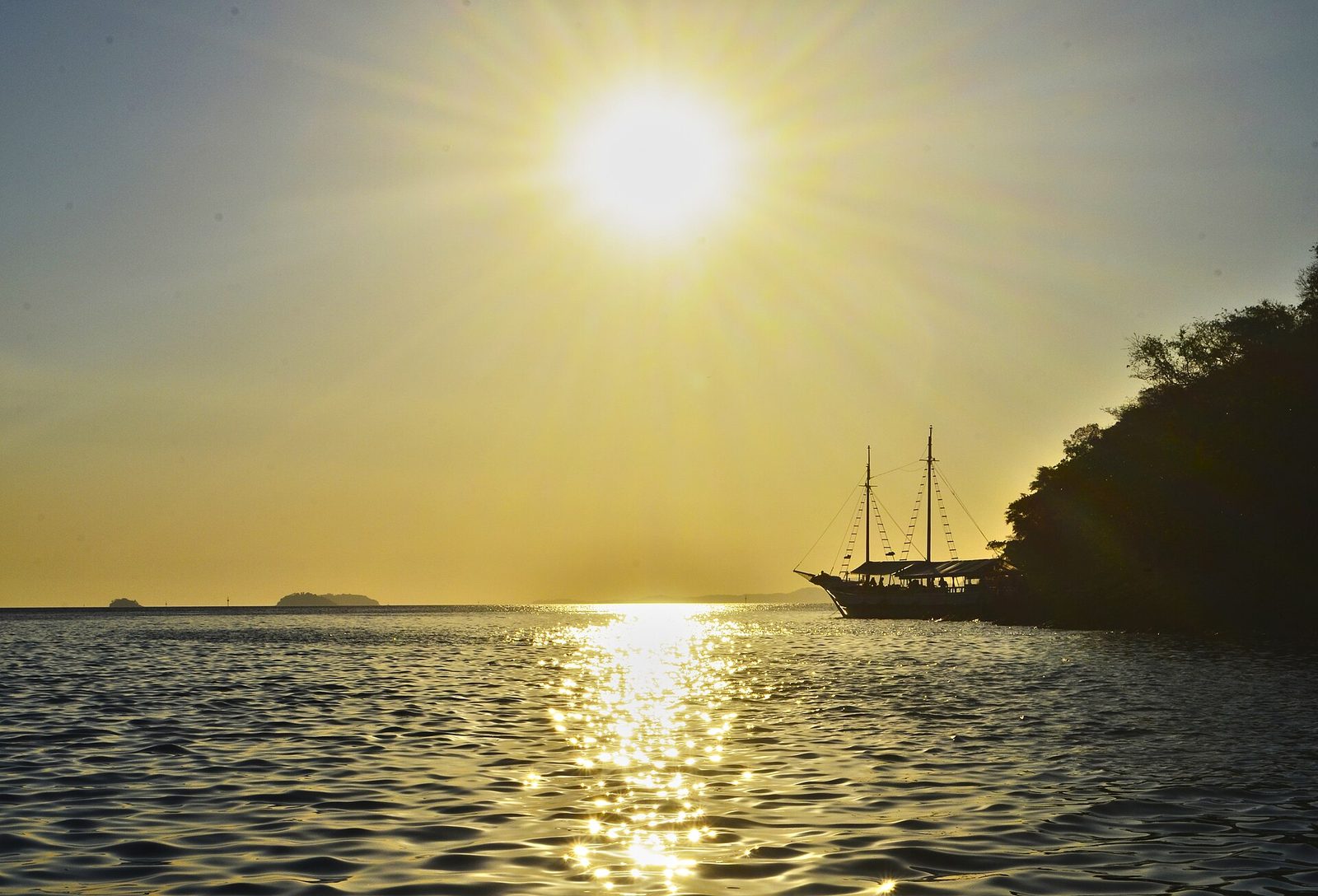
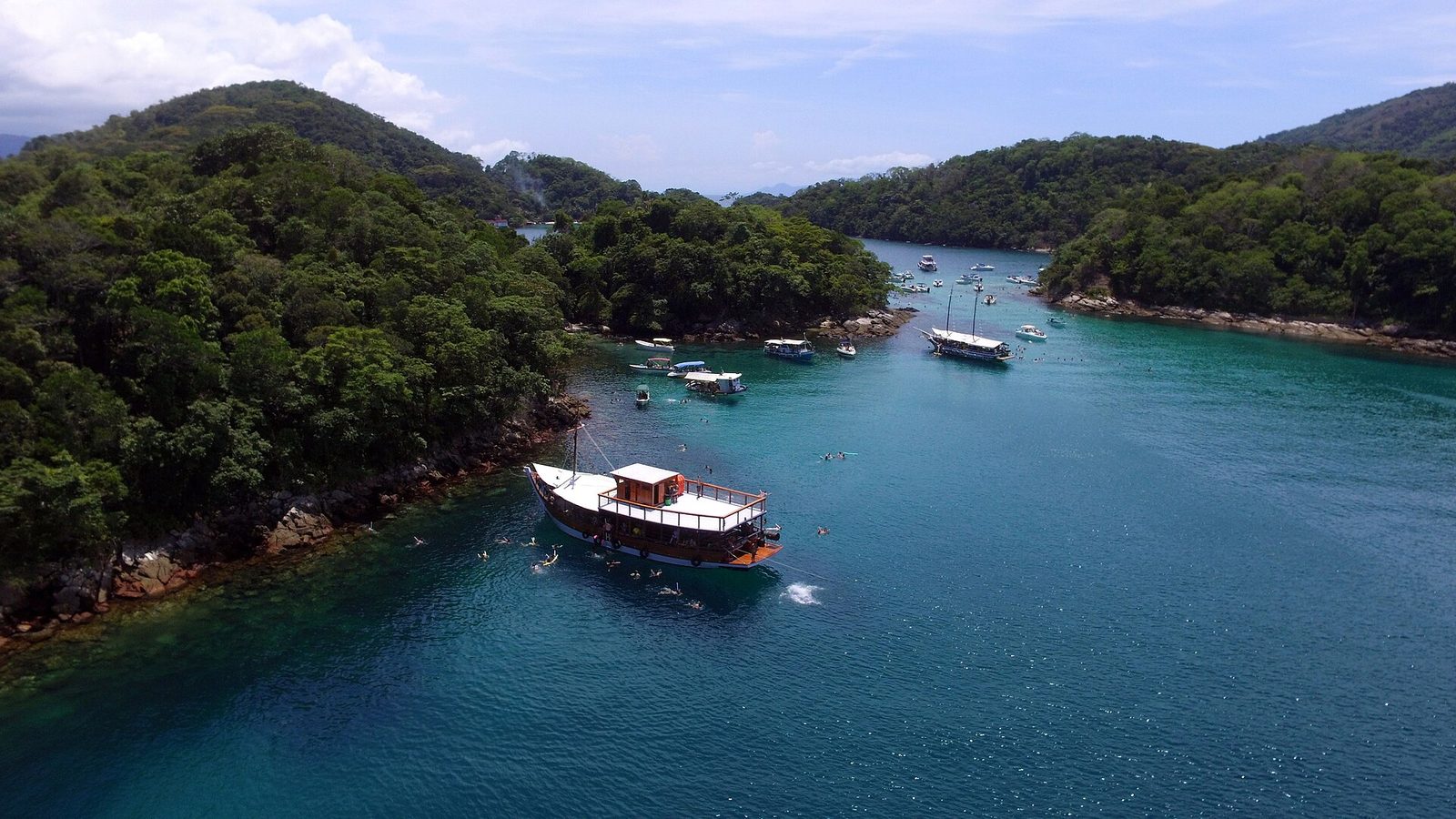
If you only do one thing underwater on the Costa Verde, make it a snorkel from a day boat. It requires no certification, almost no skill, and very little gear, and it delivers the single most reliable way to see the region's marine life. The classic outing is a schooner tour of the bay: a broad wooden boat that motors out from Paraty in the morning, anchors at a string of sheltered coves through the day, and gives everyone aboard an hour or so at each stop to swim, snorkel, and drift over the rocks. It is relaxed, social, and built around exactly this kind of easy water time.
You can read more about how these trips work in the guide to Paraty's islands and boat tours, but the short version is that the schooner is your platform. The crew drops anchor in a calm cove, hands out or rents masks and fins, and you go in straight from the ladder or the swim step. There is no shore entry over slippery rocks, no long surface swim, no navigation to worry about. You slide into the water, put your face down, and the reef is right there below you.
The gear, kept simple
Snorkeling needs almost nothing, and that is part of the joy of it. A mask that seals well against your face, a snorkel to breathe through while you float face-down, and a pair of fins to move without effort are the whole kit. Most schooners and operators have gear to lend or rent, though the quality varies, so if you snorkel often it is worth bringing your own mask; a good seal makes all the difference between a clear window on the reef and a slow trickle of leaking seawater. A thin rash guard or wetsuit top is smart in cooler months and doubles as sun protection on your back, which burns fast when you are floating for an hour with your shoulders at the surface.
- A well-fitting mask, tested for a good seal before you get in the water.
- A snorkel, ideally one you have used before so the breathing feels natural.
- Fins that fit without pinching, so an hour in the water leaves no blisters.
- A rash guard or wetsuit top for warmth in winter and sun cover year-round.
- Reef-safe sunscreen on any skin the rash guard does not cover.
Floating over rock and seagrass
The technique, if you can call it that, is to relax and let the water hold you. Snorkeling is nearly effortless once you trust your gear: you float on the surface, breathe slowly through the snorkel, and let your fins do the small work of moving you along. Over the boulder fields you drift and watch fish work the crevices; over the seagrass beds you glide across a soft green meadow where rays sometimes rest and small creatures hide. Keep your movements slow and your fins well clear of the rock so you neither kick up silt nor scrape the living surface below you. The less you thrash, the more you see, because the fish stop treating you as a threat and go back to their business.
The popular snorkel stops
Certain coves have become fixtures on the day-trip circuit for good reason: they are calm, they are pretty, and the water in them tends to hold its clarity. The most famous is the Blue Lagoon, known locally as Lagoa Azul, a sheltered patch of water between islands where the sea turns a bright, pale turquoise over a light bottom. It is shallow, protected, and usually busy with boats and swimmers, which is both its appeal and its drawback. On a calm morning before the crowds thicken, floating in the Lagoa Azul is genuinely lovely, and the resident fish are so used to visitors that they crowd right up to snorkelers.
Beyond the Blue Lagoon, the bays are dotted with island coves and sheltered beaches that make excellent snorkel stops. Many of the best are reachable only by boat, tucked into the folds of the islands where the water stays flat. Others sit at the edge of beaches you can also reach on foot or by a shorter crossing; the guide to Paraty's beaches covers those in detail and is worth reading if you would rather build your day around sand and easy water than a full schooner circuit.
Reading a cove before you go in
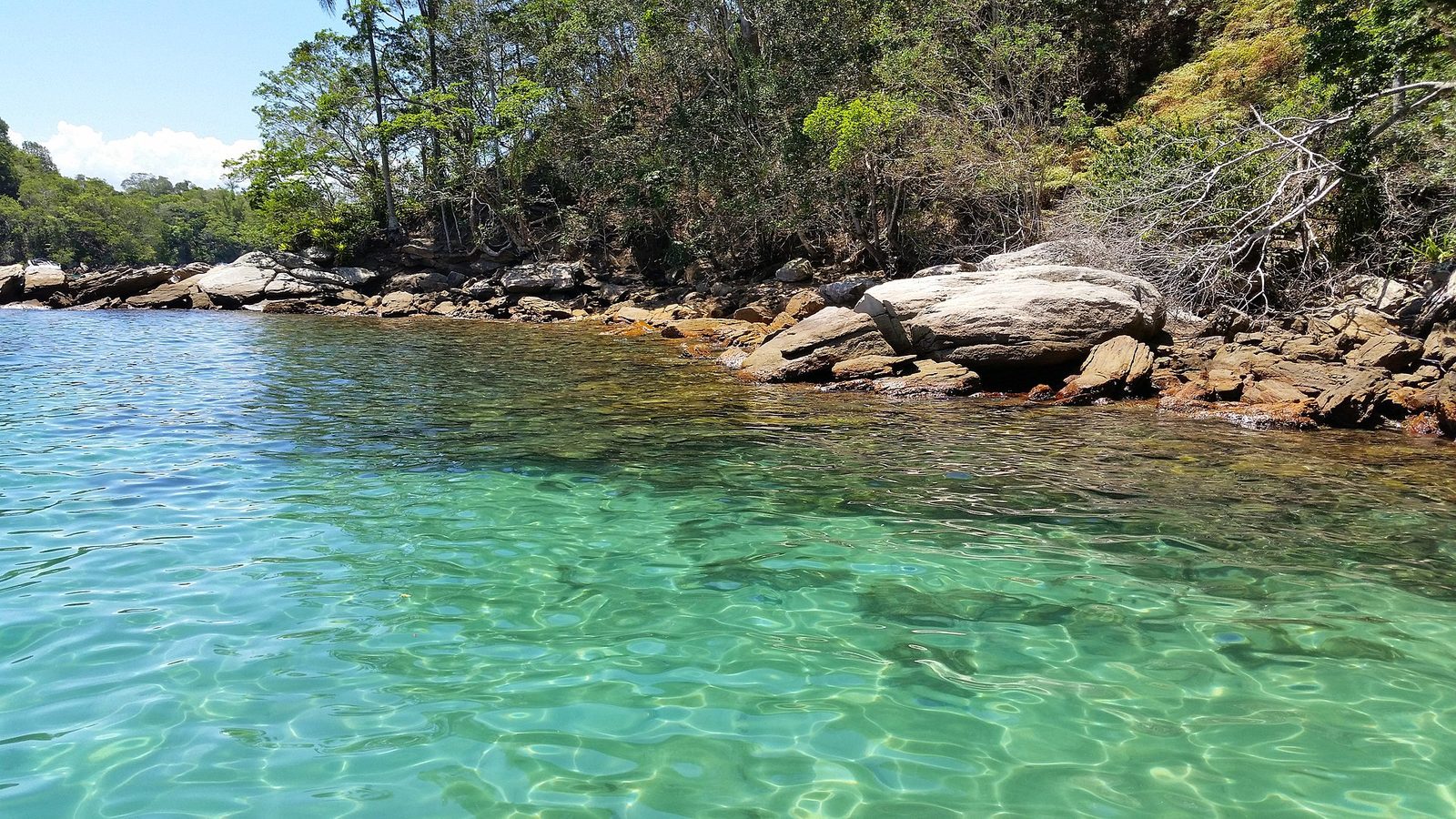
Not every calm-looking cove is equally good on a given day. A little judgment goes a long way. Look at the water color from the boat: a bright, translucent green or blue usually means decent visibility, while a milky or brownish cast, often near a river mouth or after rain, means the clarity will be poor and you may see little. Watch for boat traffic, because the popular stops fill with schooners and small craft, and a snorkeler at the surface is hard to see from a moving boat. Notice whether there is any current pulling along the shore. In most sheltered coves there is very little, but where two islands pinch the water together, a gentle drift can carry you farther than you mean to go.
Timing your swim
The same cove can be a different experience depending on when you reach it. Early in the day the water is often calmest and clearest, the light is soft, and the crowds have not yet arrived. By midday the popular lagoons can be thick with boats and swimmers, which stirs up the bottom and scatters the fish. If your schooner lets you choose, take your snorkel early at each stop rather than after lunch, and if you are building your own day, aim to reach the marquee spots like the Blue Lagoon before the mid-morning rush. The season matters too, and how the wetter and drier months change what you find below the surface is worth weighing before you settle on a date.
On a calm morning before the crowds thicken, floating in the Blue Lagoon is genuinely lovely.
Scuba diving around Angra dos Reis and Ilha Grande
When people talk about serious diving on the Costa Verde, they are usually talking about the waters around Ilha Grande and Angra dos Reis, a little up the coast from Paraty. This is where the region's best-known dive sites cluster, and where the rocky underwater terrain comes into its own. The bay of Angra is scattered with islands, and the drowned granite that makes the scenery so striking above water forms pinnacles, walls, and boulder-strewn slopes below it. Add in a handful of wrecks and you have a dive area with real variety, well within reach of anyone based around Paraty for a few days.
The dedicated guide to Angra and Ilha Grande covers the logistics of getting there and what the area is like above the waterline. Underwater, the appeal is the structure: rock faces that drop away into the green, pinnacles that rise from deeper water and gather fish around them, swim-throughs and crevices in the boulder fields, and the encrusting life of a temperate reef, all sponges and algae and small hidden creatures. It is a landscape rather than a coral garden, and it rewards divers who like to explore terrain and hunt for the small stuff.
A typical dive day runs from a boat rather than the shore. You meet the operator in the morning, load gear aboard, and motor out to one or two sites, with a surface interval spent back on deck in the sun between dives. Because the sites cluster among the islands, the boat rides are usually short and the water at the mooring is usually calm, which makes gearing up and getting in far easier than it is on an exposed coast. Guides here tend to lead dives in small groups, staying with you and setting a route along the rock, and that guided style suits water where the terrain matters more than any single headline creature. Bring your certification card and your logbook, be honest about how recently and how much you have dived, and let the guide match the site to the group.
Pinnacles, walls, and boulder fields
The natural sites are the heart of the diving here. Rocky pinnacles that rise toward the surface act as magnets for fish, which gather in the moving water around them, and they are often the most alive spots on a given dive. Walls and steep rocky slopes give you an easy profile to follow, dropping gradually as you explore and turning shallower as you work your way back. The boulder fields, where house-sized rocks have tumbled into loose piles, are full of gaps and overhangs where octopus, moray-like fish, and shy creatures shelter. Because so much of the terrain is shallow and sheltered, these sites suit a range of experience levels, though conditions vary from site to site and day to day, and your operator will steer you toward what suits your training.
The wrecks
The bay also holds a few wrecks, which add a different flavor to a dive. A sunken hull gathers life quickly in these productive waters, becoming an artificial reef furred with growth and busy with fish that shelter in and around the structure. Wrecks carry their own hazards and demand respect: they can be deeper, entering an enclosed structure requires specific training that most recreational divers do not have, and old metal has sharp edges and unstable sections. Treat any wreck as something to admire from outside unless you hold the right certification and are diving with a guide who knows the site. Even from the outside, a wreck softened by years underwater is one of the more memorable dives the region offers.
The marine life you can actually expect
Set the whale-sharks-and-manta-rays fantasy aside and the real cast of characters here is genuinely rewarding. The rocky reefs of the Costa Verde are busy with fish that are colorful and confiding once you slow down enough to watch them. You will almost certainly share the water with parrotfish, grazing noisily on the algae-covered rock, and with clouds of sergeant-majors, the small striped fish that hang over the reef and crowd around snorkelers. Wrasses work the crevices, small schooling fish shimmer past in the mid-water, and the whole reef hums with the ordinary, absorbing traffic of a productive temperate sea.
The bigger encounters are the ones you cannot count on but that make a dive memorable when they happen. Rays sometimes rest on the sandy patches between the rocks or over the seagrass, and coming upon one is always a small thrill. Octopus hide in the boulder fields, and spotting one, often only because it moves, is a reward for patient looking. Now and then a sea turtle cruises through, unhurried and unbothered, and the whole group forgets about everything else. These are not guaranteed sightings, and any honest operator will tell you so, but the possibility is real and it is part of what keeps divers coming back.
Give your eyes time to adjust to the reef's scale. The first pass over a boulder field can look almost empty, because the most interesting animals here are small, camouflaged, and tucked into shadow. Slow down, hover over one patch of rock, and the reef fills in around you: a blenny watching from a hole, a shrimp working a crevice, an octopus you would have swum straight past. The people who see the most are almost always the ones who cover the least ground, and a snorkeler idling patiently over a single stretch of reef will often out-see a diver racing across the whole site.
The Costa Verde's marine life extends well beyond what you meet on a single dive, and some of the most remarkable animals are seasonal visitors you are more likely to see from the boat than beneath it. The guide to the region's whales and turtles covers those larger encounters, from the sea turtles that nest and feed along this coast to the whales that pass offshore in season. Underwater, your job is to be a quiet, respectful guest and let the animals decide how close they want to come.
- Parrotfish grazing on the algae-covered rock, often audible as they scrape.
- Sergeant-majors and other small striped fish crowding over the reef.
- Wrasses and small schooling fish working the crevices and mid-water.
- Rays resting on sand or seagrass between the rocks.
- Octopus tucked into the boulder fields, usually spotted only when they move.
- The occasional sea turtle passing through, unhurried and unbothered.
Conditions, visibility, and seasons
Here is where honesty earns its keep. Visibility on the Costa Verde is variable, and anyone who promises you crystal water every day is selling something. The single biggest factor is rain. Heavy rain sends runoff pouring off the mountains and out of the rivers, carrying sediment into the bays and turning the water green and cloudy, sometimes for days afterward. A dive or snorkel that would have been clear and bright on a settled morning can be murky and disappointing right after a storm. The good news is that the sheltered bays also settle and clear relatively quickly once the weather calms, so patience and flexibility pay off.
Season shapes both temperature and clarity, and the two do not always line up conveniently. The summer months bring the warmest water, which is a real comfort for long snorkels and unhurried dives, but summer is also the wetter season, so those warm days can be interrupted by storms that cloud the water. Winter brings cooler water that calls for exposure protection, but the drier air and calmer weather can mean stretches of better visibility. There is no single perfect window; there is a set of trade-offs, and the guide to the best time to visit walks through them so you can weigh warmth against clarity for your own trip.
Whatever the season, treat the forecast as part of your planning. If you have several days on the coast, keep your diving and snorkeling flexible rather than locking it to a single date, and go in the water on the calm, settled mornings rather than immediately after a downpour. Operators watch the conditions closely and will often reschedule or move to a more sheltered site when the weather turns, which is a good sign of a responsible outfit. The reserve's own team can help you read the week's weather and pick a good morning to head down to the coast.
Learning to dive or trying a discover-scuba session
You do not need to arrive certified to breathe underwater on the Costa Verde. The calm, sheltered bays that make the region so forgiving for snorkelers also make it a sensible place to try scuba for the first time, and most dive operators offer some form of introductory experience for people who have never used the gear.
The discover-scuba experience
A discover-scuba session, sometimes called a try-dive, is a short, closely supervised introduction to breathing underwater. An instructor teaches you the handful of essentials, fits you with gear, and takes you into shallow, protected water where you can get used to the strange, wonderful sensation of breathing from a tank while the instructor stays within arm's reach the whole time. It is not a certification and it does not qualify you to dive on your own, but it is a genuine taste of the underwater world and a good way to find out whether diving is for you before committing to a full course. The sheltered coves of this coast, with their calm water and gentle terrain, are close to ideal for a first breath.
Getting certified
If the try-dive hooks you, the natural next step is an entry-level certification course, which combines classroom or online theory, confined-water practice, and a series of supervised open-water dives. The calm bays around Ilha Grande and Angra are a reasonable place to learn, and several operators run courses through the recognized international training agencies. A course takes a few days, so it suits travelers who have built some time into their trip rather than those passing through for a single afternoon. Ask any prospective school which agency it certifies through, what the course includes, and what the instructor-to-student ratio is, because a smaller group means more attention and a safer, more comfortable learning experience.
Whether you are trying scuba for the first time or working toward a card, keep your expectations tied to the same honest picture of these waters: rocky reefs, variable visibility, and a temperate-to-tropical sea rather than a coral wonderland. Learning here is learning in real, working conditions, which arguably makes you a better and more adaptable diver than someone who only ever descends into glass-clear tropical water.
Choosing a responsible, certified operator
The single most important decision you will make about diving or snorkeling the Costa Verde is who you go with. A good operator keeps you safe, protects the reef, and shows you more than you would find on your own; a careless one puts you, the other guests, and the marine environment at risk. Because this guide will not name names or quote prices, both of which change, the emphasis here is on how to judge an operator for yourself.
Start with credentials. Any dive operator you trust with your safety should be able to show that it is properly licensed and that its instructors and divemasters are certified through a recognized international training agency. Well-maintained gear, tanks that have been serviced and tested, and a clear, unhurried safety briefing are all signs of an outfit that takes the work seriously. For snorkeling from a schooner the bar is lower, but the same instincts apply: a crew that counts heads, watches the water, and briefs guests on where to swim and where the boat traffic is has its priorities in order.
- Proper licensing and instructors certified through a recognized agency.
- Well-maintained, serviced gear and tanks, not tired or improvised equipment.
- A clear safety briefing that does not feel rushed or skipped.
- Sensible group sizes, so no one is left unwatched in the water.
- A willingness to reschedule or change sites when conditions turn poor.
- Visible care for the reef, from mooring practices to what they tell guests about touching.
Pay attention, too, to how an operator talks about the environment. The ones worth your money are the ones that brief guests not to touch or stand on the reef, that avoid dropping anchor on living substrate, that carry their trash home, and that treat marine life as something to observe rather than chase or handle. An operator that clearly cares about the reef is usually one that clearly cares about you, because the same attentiveness underlies both. The reserve keeps a sense of which local outfits share that conservation-first outlook, and the front desk is glad to point guests toward operators who treat the coast the way we treat the land above it.
Marine etiquette and protecting the reef
Everything you have read so far assumes a healthy reef to visit, and keeping it that way is partly on us. The rocky reefs and seagrass beds of the Costa Verde are living systems, slower to recover from damage than they look, and the cumulative effect of thousands of visitors a year is real. Good underwater manners are not fussy rules; they are the difference between a coast that stays worth visiting and one that is quietly worn away.
The core principle is simple: look, do not touch. The reef is not a handrail. Standing on rock, grabbing it to steady yourself, or kicking it with your fins scrapes away the encrusting life that has taken years to grow, and a careless fin kick over seagrass or a silty bottom can undo a patch of habitat in a moment. Keep your body horizontal and your fins up and away from the bottom, control your buoyancy if you are diving, and give the reef a respectful margin. Never chase, corner, or handle marine life; a sea turtle or a ray will tolerate a quiet observer at a distance and flee from a grabbing hand, and the animal's comfort matters more than your photograph.
Reef-safe habits that matter
Wear reef-safe sunscreen, or better yet cover up with a rash guard and let the fabric do the work; many common sunscreens contain chemicals that harm marine life. Never touch, stand on, or grab the rock and reef. Ask that boats never anchor on living substrate, using moorings or sandy patches instead. And take everything home with you, including every scrap of trash, so nothing you brought stays behind in the water.
Sunscreen deserves its own mention because it is the mistake even careful people make. Many ordinary sunscreens contain chemicals that are harmful to marine life and wash off your skin the moment you get in the water, so a bay full of snorkelers can carry a real chemical load. The better approach is to cover up: a rash guard or wetsuit top protects far more skin than any lotion and leaves nothing in the water. For the skin you cannot cover, choose a reef-safe formula. It is a small change that makes a genuine difference in a cove that hosts swimmers every single day.
Honest safety underwater
The Costa Verde is a forgiving place to get in the water, but forgiving is not the same as risk-free, and a clear head about the hazards is part of enjoying it. The most underrated danger is the most ordinary one: boat traffic. The popular coves fill with schooners, launches, and small private boats, and a snorkeler lying flat at the surface is very hard to see from a moving vessel. Stay within the area your crew points out, keep close to your boat or a marked swimming zone, and never assume an approaching boat has seen you. If you are diving, surface with a clear look upward and, where it is the practice, a marker so the boats know where you are.
Currents are usually mild inside the bays, which is much of the region's appeal, but they are not always absent. Where islands pinch the water together or a cove opens toward the sea, a gentle drift can carry you farther than you intend, especially while you are absorbed in watching the reef. Check now and then that you have not wandered from your boat, and if you feel yourself being pulled, swim across the current rather than fighting straight against it. For divers, the rule that matters most is the oldest one: never dive beyond your training. Depth, wrecks, overhead environments, and challenging conditions all demand specific skills, and the sea does not grade on effort. Dive the sites your certification and experience cover, build up gradually, and let a good guide keep you honest about your limits.
- Treat boat traffic as the main hazard; stay visible and close to your boat or zone.
- Watch for drift where islands pinch the water or a cove opens seaward.
- Swim across a current, not straight against it, if you feel yourself pulled.
- Never dive beyond your certification, and build up depth and difficulty slowly.
- Do not snorkel or dive alone; keep a buddy and keep an eye on each other.
- Sit out the day, or move to a sheltered site, when conditions turn against you.
None of this is meant to frighten anyone out of the water. The overwhelming majority of days on the Costa Verde pass without incident, and the sheltered bays are about as benign as open water gets. The point is only that a little respect for the sea, for the boats, and for your own limits turns a good day into a safe one, every time.
Bringing it back to the reserve
The reserve sits above the seven waterfalls, in the forested hills behind Paraty, and that setting is the whole point of ending your underwater days here. There is a particular pleasure in coming back from a morning on the water, salt still on your skin, and climbing up into the cool green of the reserve for the afternoon; the coast and the mountains are two halves of the same landscape, and you feel the connection most keenly when you move between them in a single day. The same waters that fill the bays fall as rain on these hills, run down through the forest, and gather in the streams that feed the waterfalls, so the reef you floated over and the falls you swim beneath are quite literally part of one system.
That is also why the conservation-first outlook that shapes the reserve extends naturally to the sea. The care we take with the forest, the organic farm, and the light footprint of the chalets is the same care we ask you to take with the reef: look more than you touch, leave nothing behind, and treat the wild things as neighbors rather than attractions. If you would like help planning a day on the water, the front desk can point you toward responsible operators and help you read the week's weather for a good window. You will find more of the region mapped out in the collection of local guides, and when you are ready to build a trip around the waterfalls and the coast together, the details for stays and booking are the place to start.